Veterans Digital ID and Reintegration Platform.
led the strategic design direction using design thinking and user centred approach, from framing the problem, running veteran interviews to facilitating workshops with the Ministry of Defence. My main responsibilities was to translate human pain points into a clear product strategy and a working MVP solution.
Scope
Client
Duration
Year
Industry
/
Project overview
(01)
Executive summary
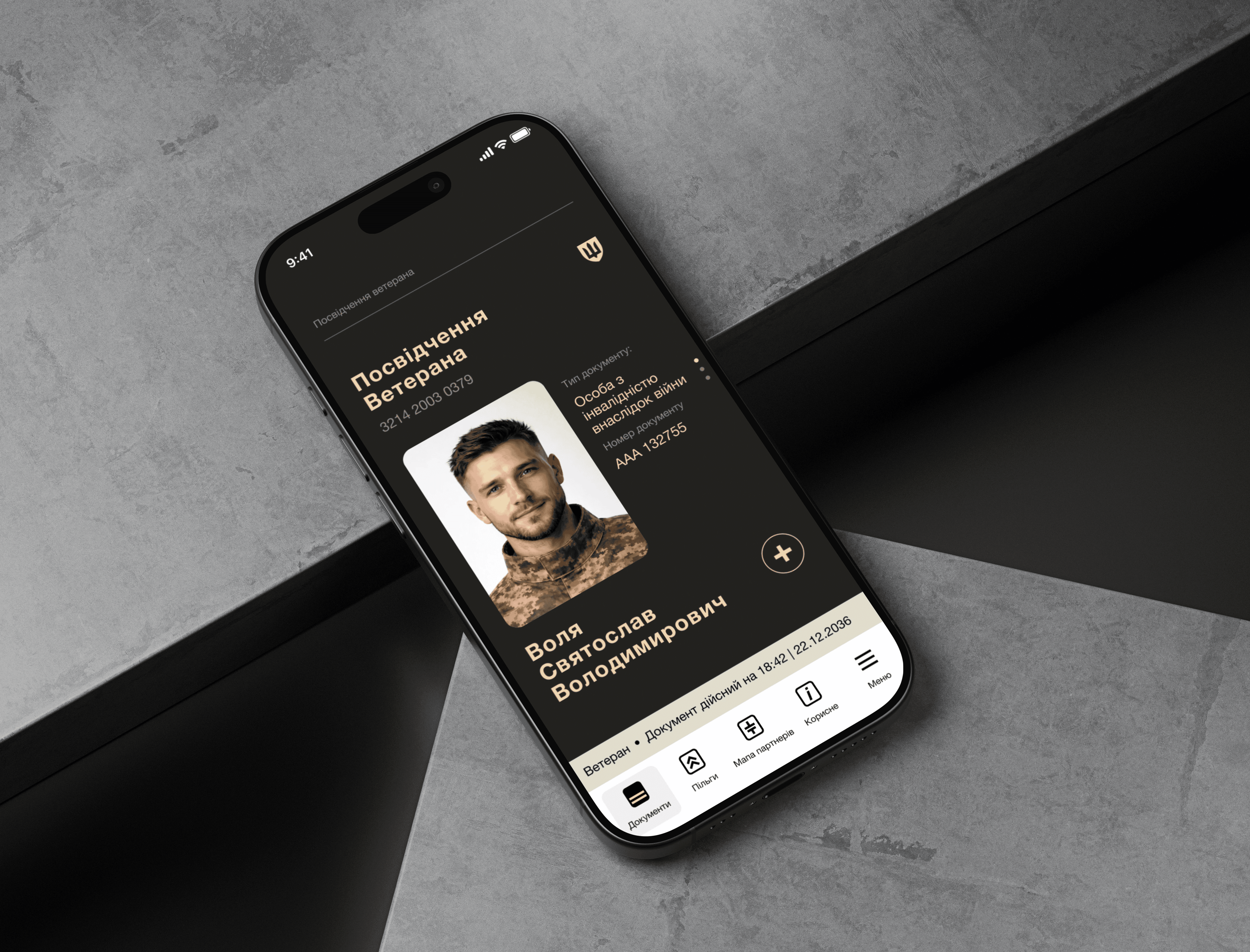
This project aimed to design and launch Ukraine’s first Digital Veteran ID, a secure, human-centred tool for identification, access to benefits, and social reintegration. Working within a small cross-functional team and alongside the Ministry of Defence, I led research, workshops, and product definition. We began with a full vision for a national veteran ecosystem, then scoped it down to an MVP: a digital ID with QR verification connected to the state registry. The larger system benefits, maps, community was planned as future phases.
My Contribution:
I owned strategic and product design within the team: conducted veteran interviews, facilitated workshops with the Ministry, mapped user journeys and personas, defined the MVP together with the tech lead and program manager. My role was to translate real pain points into a clear product direction and a working reintegration service that veterans could trust and actually use.
Key points:
Paper bureaucracy was making process of receiving Veterans ID extremely long and frustrating for veterans.
The government needed a single digital verification solution in database.
The public didn’t always understand who veterans were or what they faced.
Veterans needed recognition and easier access to support.
/
Challenges
(02)
Problem & Opportunity
Before we started, everything was disconnected. Identification depended on paper documents and separate registries that communication took month to reach with each other. Verification was slow, but even more importantly, the process of requesting and receiving the physical veteran ID was extremely bureaucratic.
Pain points discovered through research and government collaboration:
Paper‑based ID request process required multiple office visits, long queues, repeated forms, and manual verification. Many veterans simply abandoned the process.
Verification by officials was slow and unreliable, relying on outdated registries.
Benefits were invisible, veterans didn’t know what discounts, treatments, support from government they had right to claim.
Businesses had no channel to publish veteran‑focused offers.
No digital community existed for peer support, events, or psychological recovery.
Families lacked guidance on how to support veterans through reintegration.
Society was not aware how they could support veterans.
Accessibility barriers made existing digital services very difficult for veterans with disabilities or trauma.
/
Approach
(03)
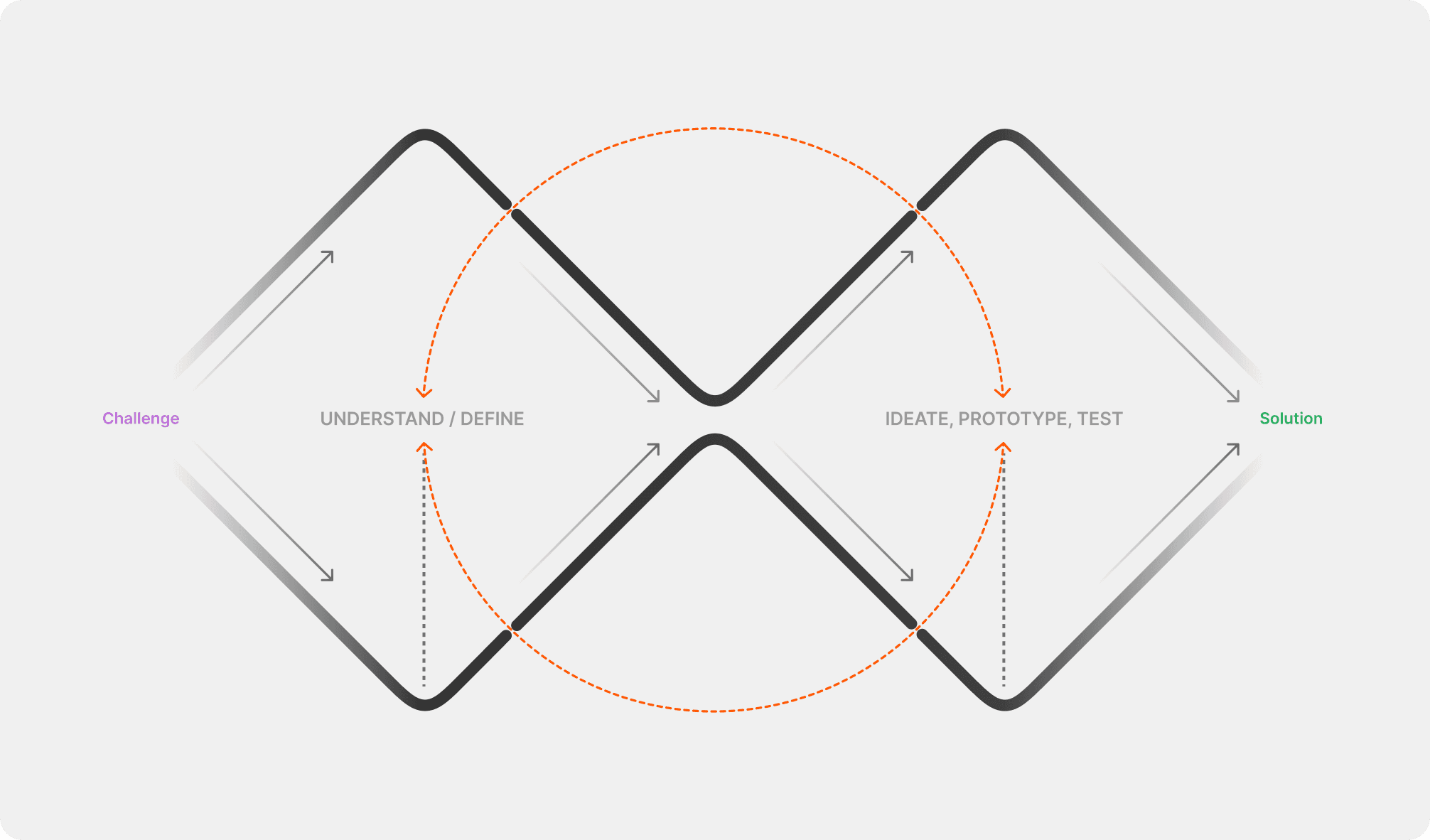
Design thinking and User centred approach:
From the start, I chose to follow a Design Thinking + User‑Centered Approach to make sure the solution was grounded in real veteran experiences—not assumptions, not bureaucracy.
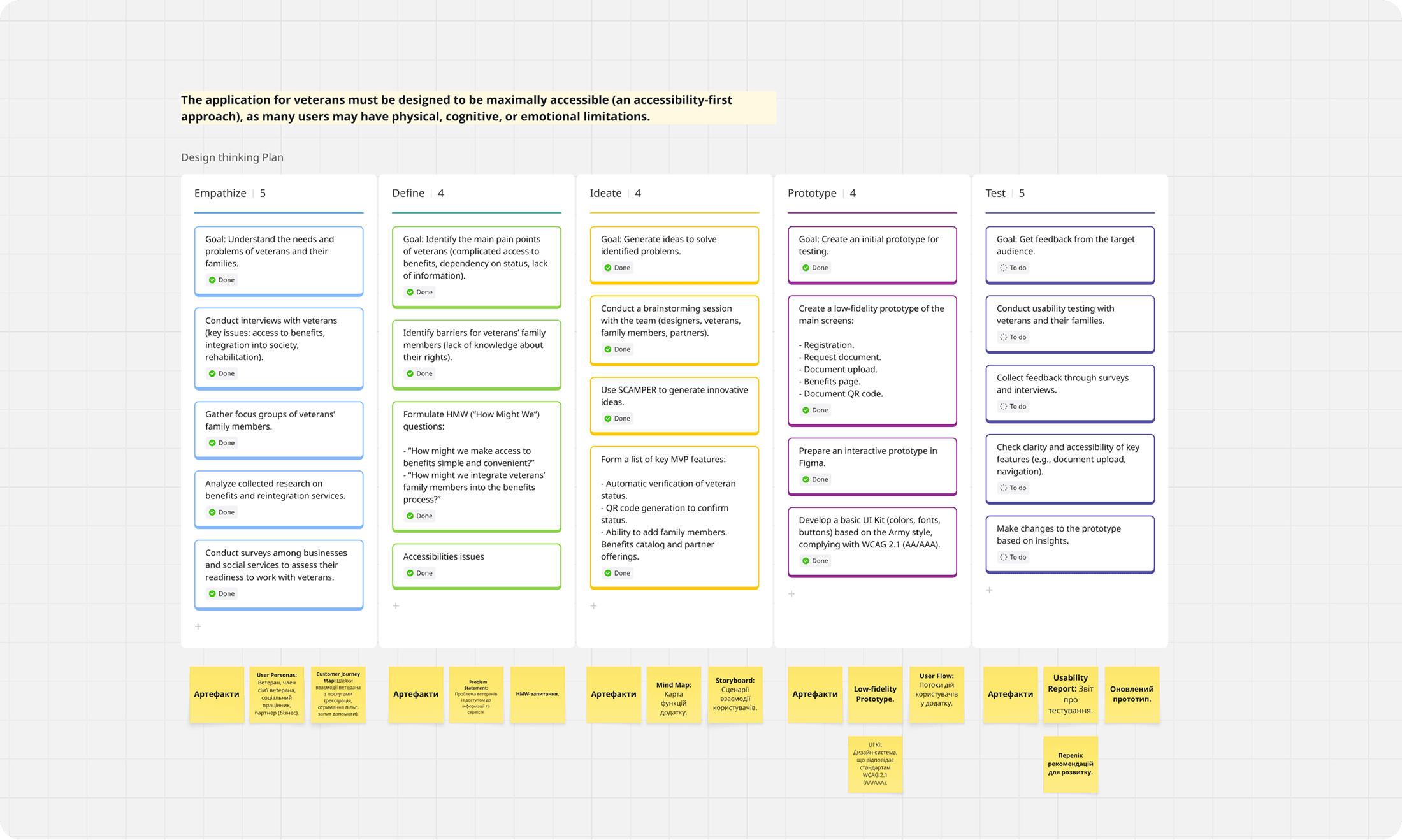
How I structured the process:
Empathise: Began with veteran interviews to understand their emotional, physical, and practical realities. Listened to stories of trauma, frustration, and daily barriers. This shaped our understanding of what “support” really means.
Understand the Ministry’s perspective: Facilitated alignment sessions to hear their constraints, expectations, legal requirements, and operational challenges.
Define: Synthesised all insights into a clear problem framing: what blocks veterans today, why the system feels broken, and what outcomes matter most.
Ideate: Explored multiple versions of the future ecosystem, benefits map, community, family support, ID verification, reintegration support, AI assistant, before narrowing down.
Prototype: Built early flows, experience maps, and structural blueprints of the full ecosystem.
Refine → MVP: Only after mapping the ideal future did we simplify it into a feasible MVP based on timelines, resources, registry complexity, and ministry needs.
Why this approach mattered:
It created a shared understanding between veterans, designers, engineers, and the Ministry of Defence. We weren’t guessing, we were designing with empathy and clarity, aligning the long‑term vision with short‑term feasibility.
/
Research & Insights
(04)
Listening to the Front Line
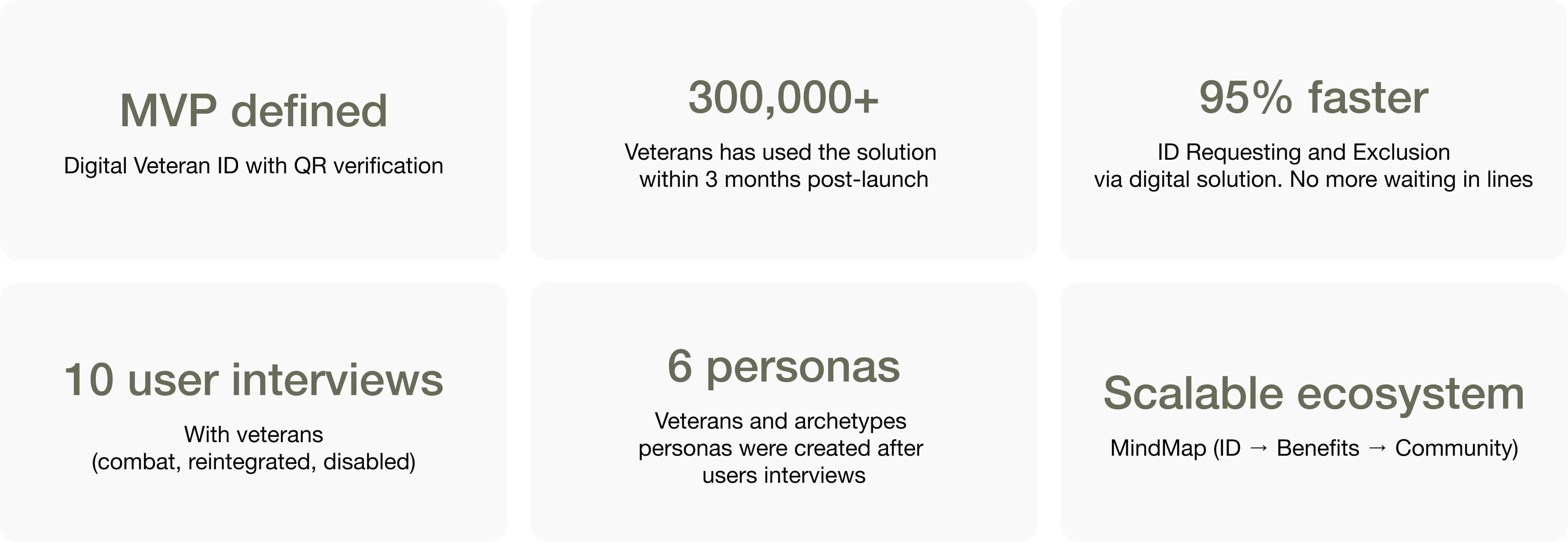
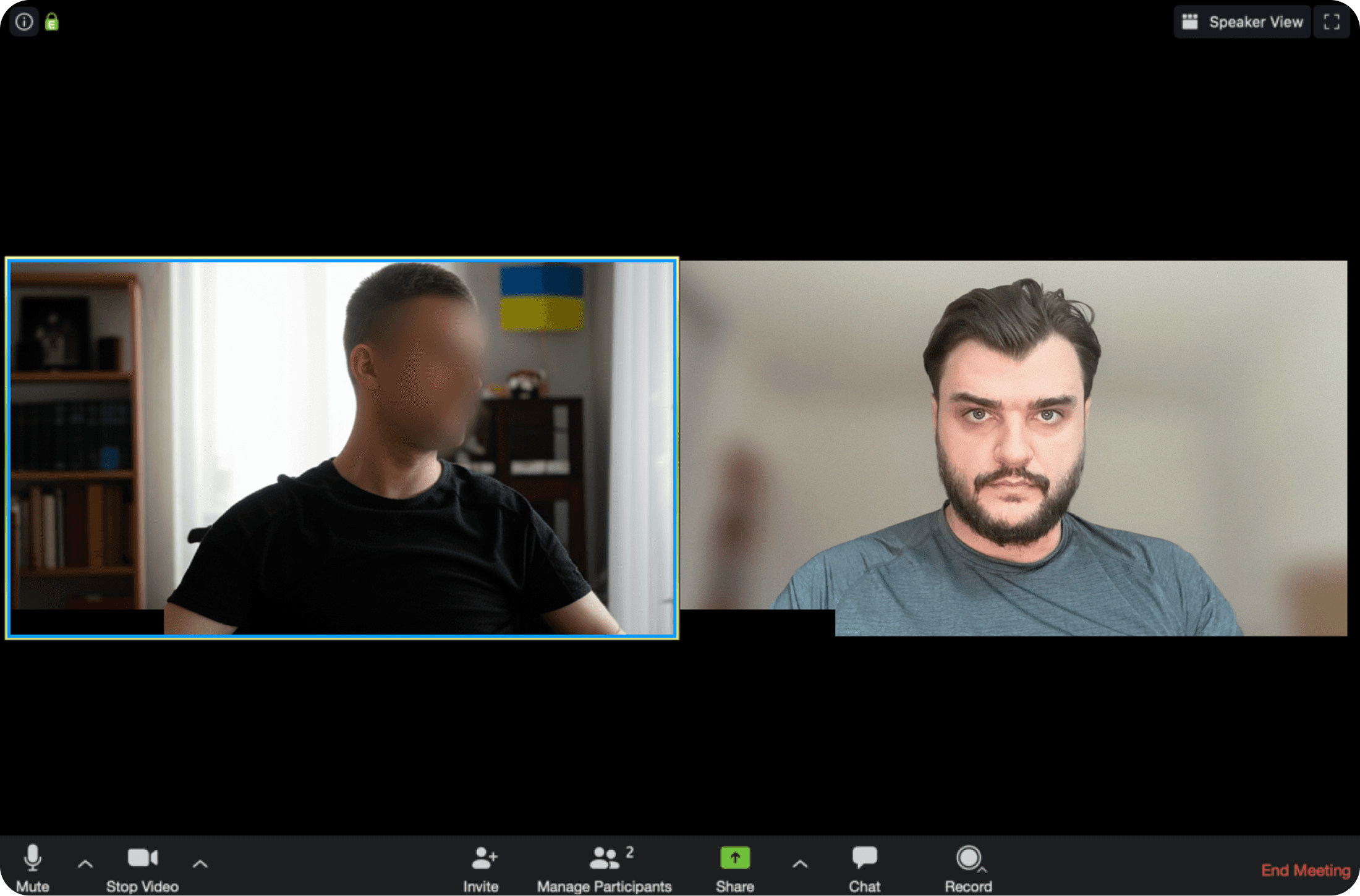
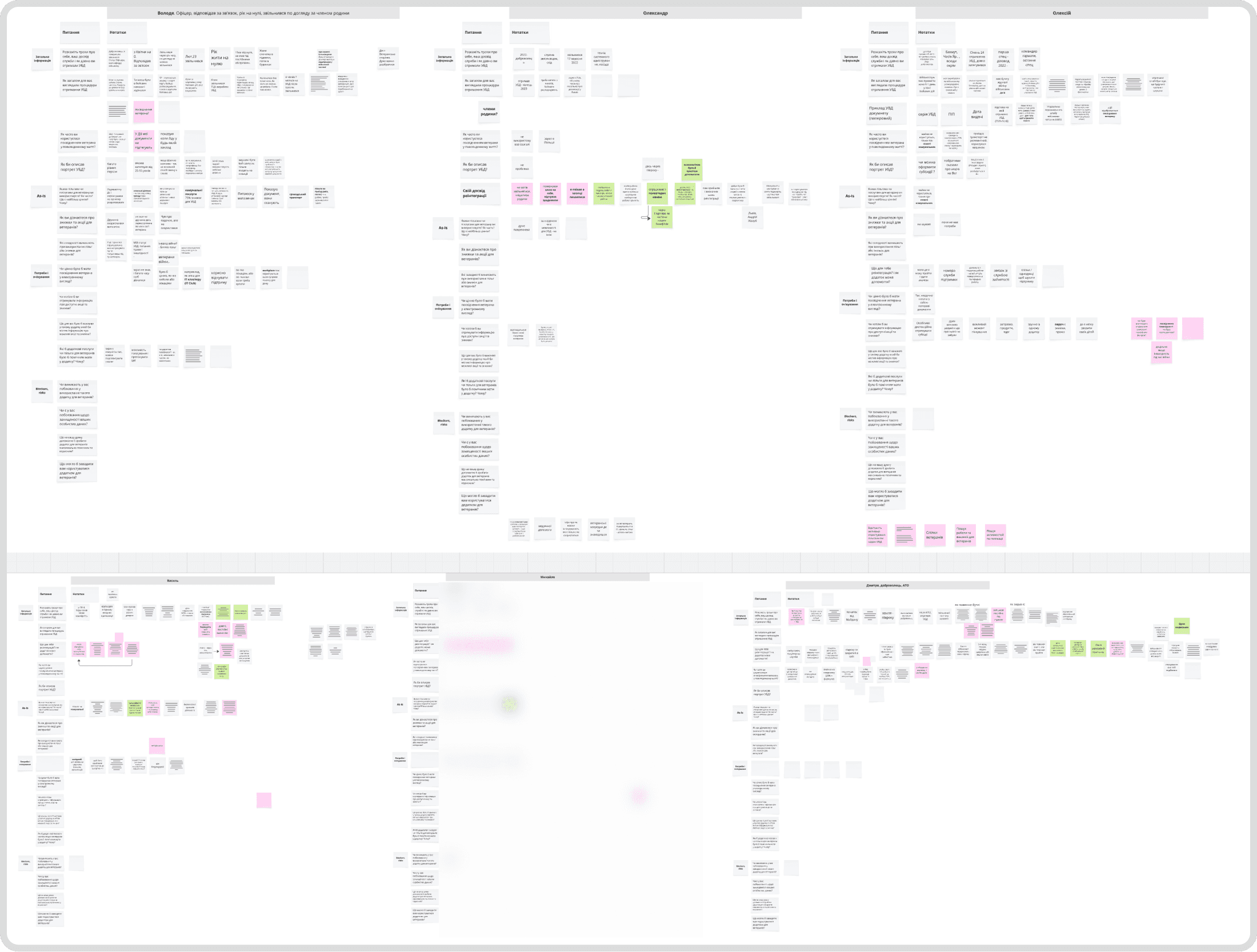
After conducting10 in‑depth interviews with Ukrainian veterans of different categories: newly demobilised, reintegrated, and those with physical injuries. I also mapped stakeholders across ministries and analysed global veteran reintegration programs (U.S., Israel).
Key findings:
First six months after return are the most vulnerable.
Veterans often feel isolated, misunderstood, or overwhelmed.
Bureaucracy significantly worsens mental stress.
Needs go beyond documentation: psychological support, community, purpose.
Different demographics (women, disabled veterans, families) require tailored experiences.
Design implication: Start with design thinking and user centred approach, create a full ecosystem vision, keeping in mind accessibility needs, then focus on a feasible, high‑impact MVP.
User interviews
/
User Personas
(05)
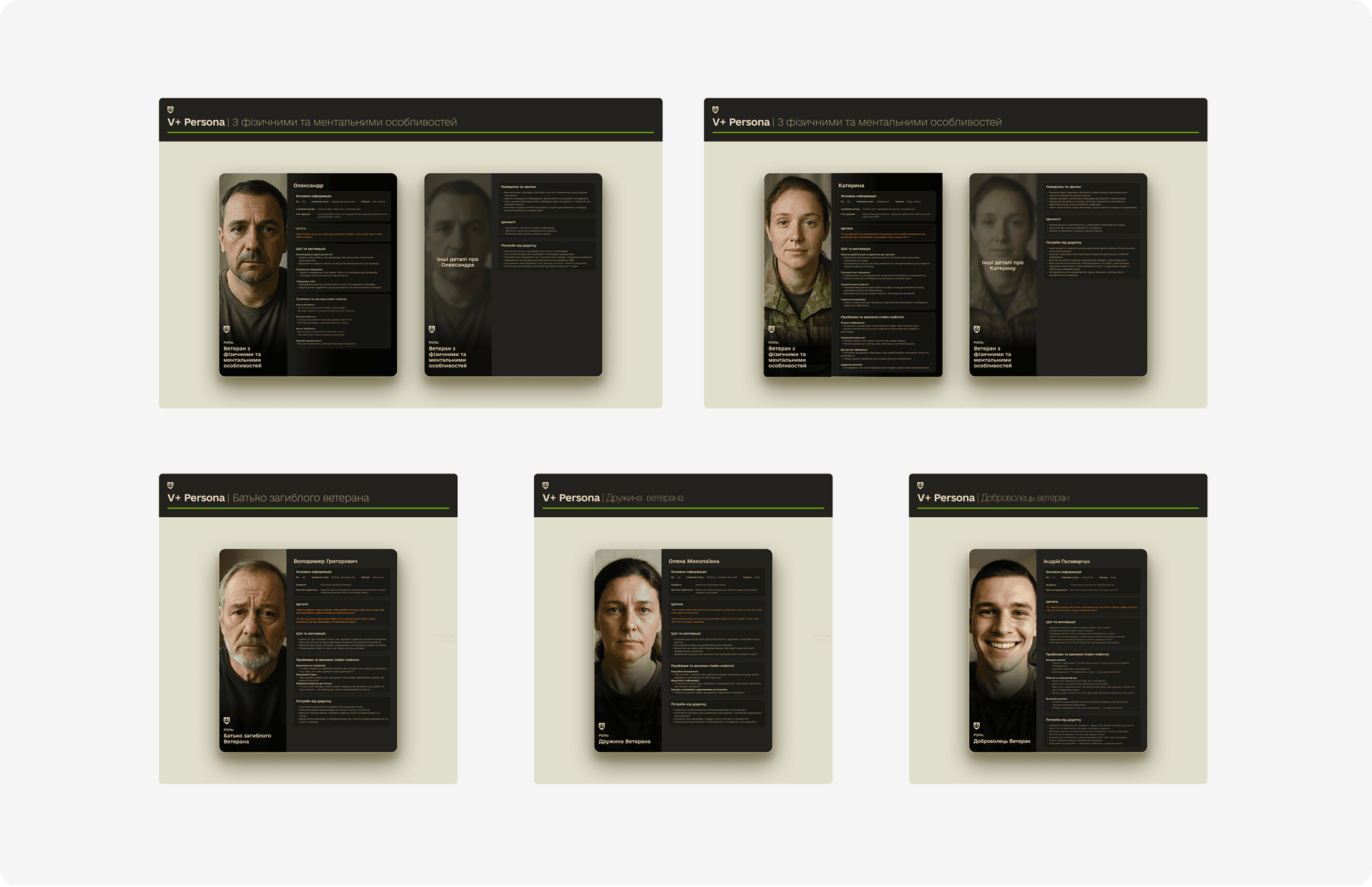
A set of selected user personas
Which was created based on insights from user interviews. These personas helped the team build empathy, understand diverse needs and constraints of veteran users and their families, and maintain a clear global perspective throughout the process. They guided decision-making for core user flows, MVP prioritisation, and ensured that design and product choices consistently aligned with real user motivations, challenges, and contexts.
All names and photos were anonymised to protect user privacy.
/
Reintegration Researches
(06)
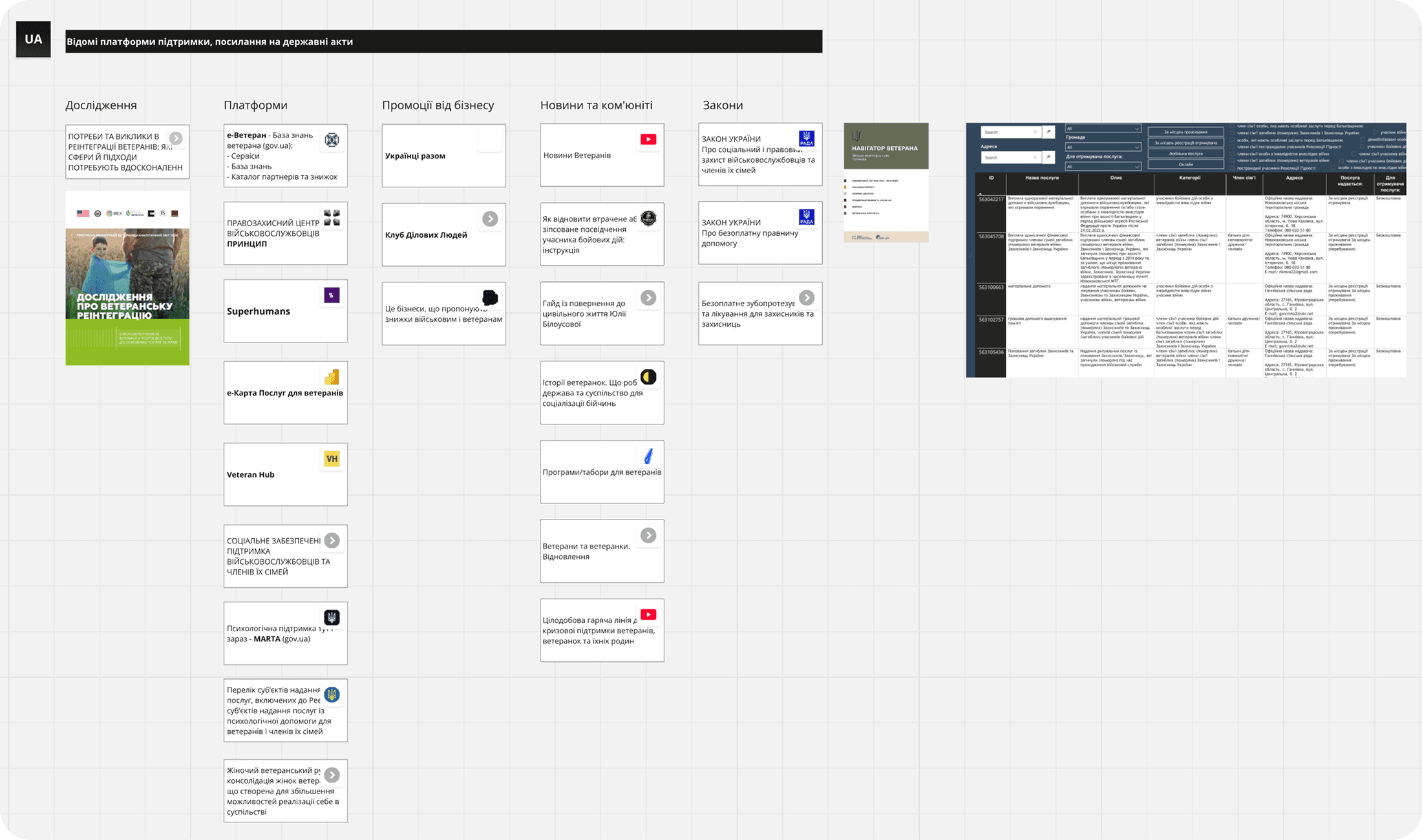
Partnership integration possibilities
We gathered and analysed consolidated research artefact that gathers findings from other Ukrainian research teams, veteran-focused platforms, potential partners, government benefits system, business promotional materials, community updates, and relevant legislation. This collection was prepared to support deeper market understanding, align on future collaboration, and explore opportunities for potential integration into the application.
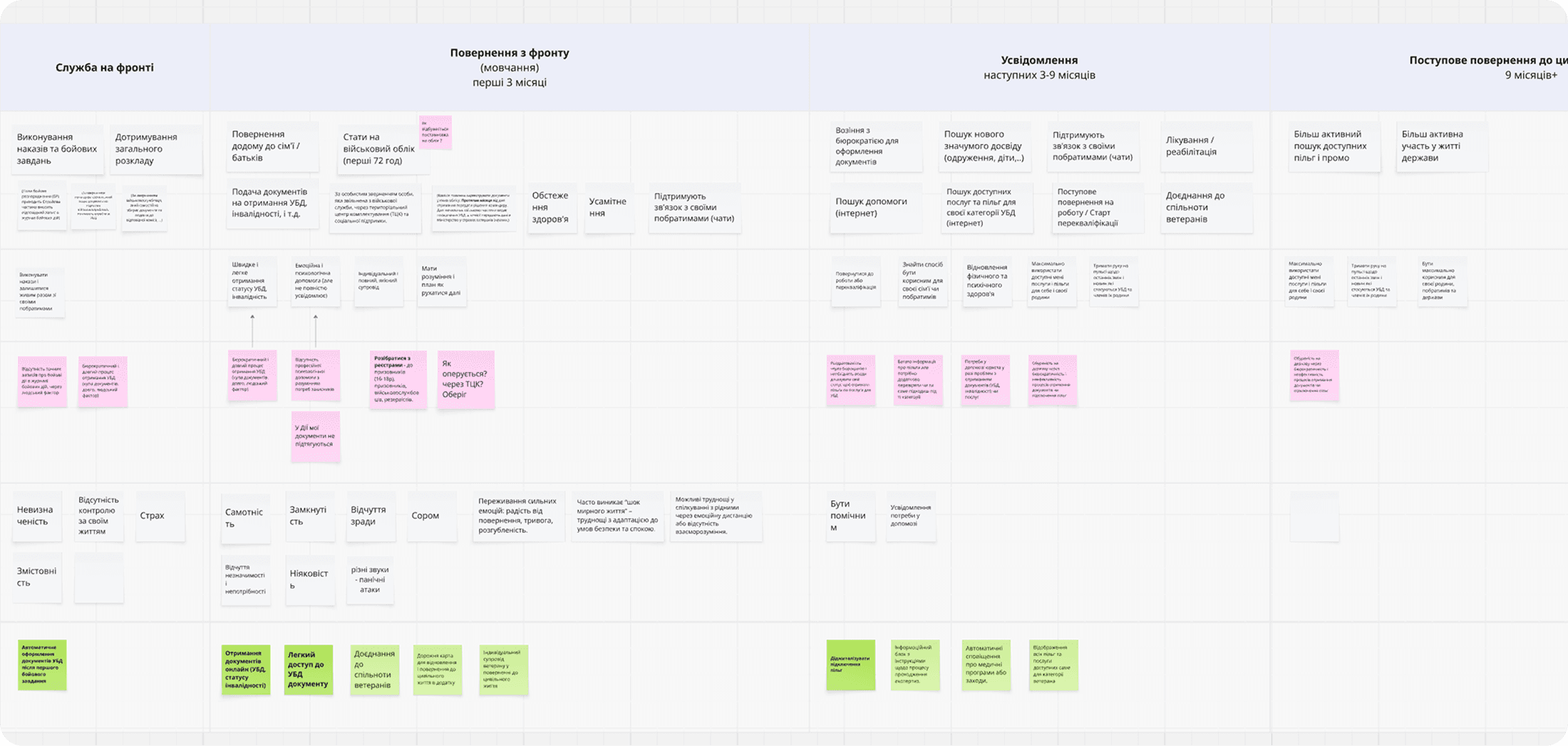
Reintegration Journey map
In parallel, our team worked on the broader reintegration strategy. Based on the interviews we conducted and the reintegration research from countries like the USA and Israel, we created a detailed Reintegration Journey Map. This helped us document every stage veterans go through when returning to civilian life and understand how our platform could support them at each step, and how society, businesses, and employers could also be prepared to receive and support them.
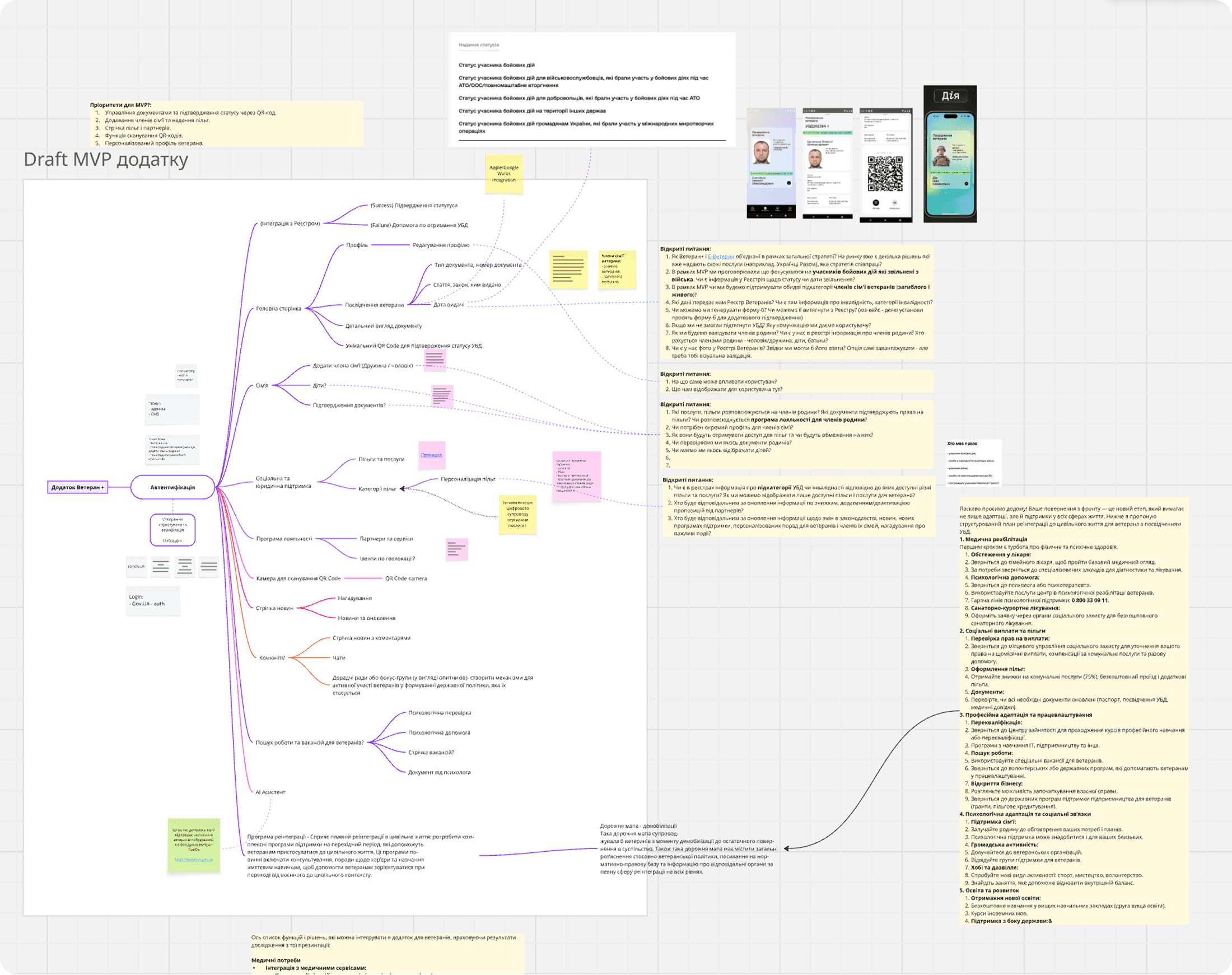
Strategy: From vision to MVP
I started with a broad vision: a full ecosystem that would grow step by step. I built a detailed MindMap that showed full potential. Digital ID, Benefits, Community, Events map, reintegration program. Together with the tech lead, program manager and the Ministry, we prioritized what could be built first.
Defined a three-phase strategy for growth.
Prioritized by impact and technical feasibility.
Decided to start with an MVP: Digital Veteran Document with QR verification.
Built the roadmap for expansion once the MVP proved stable.
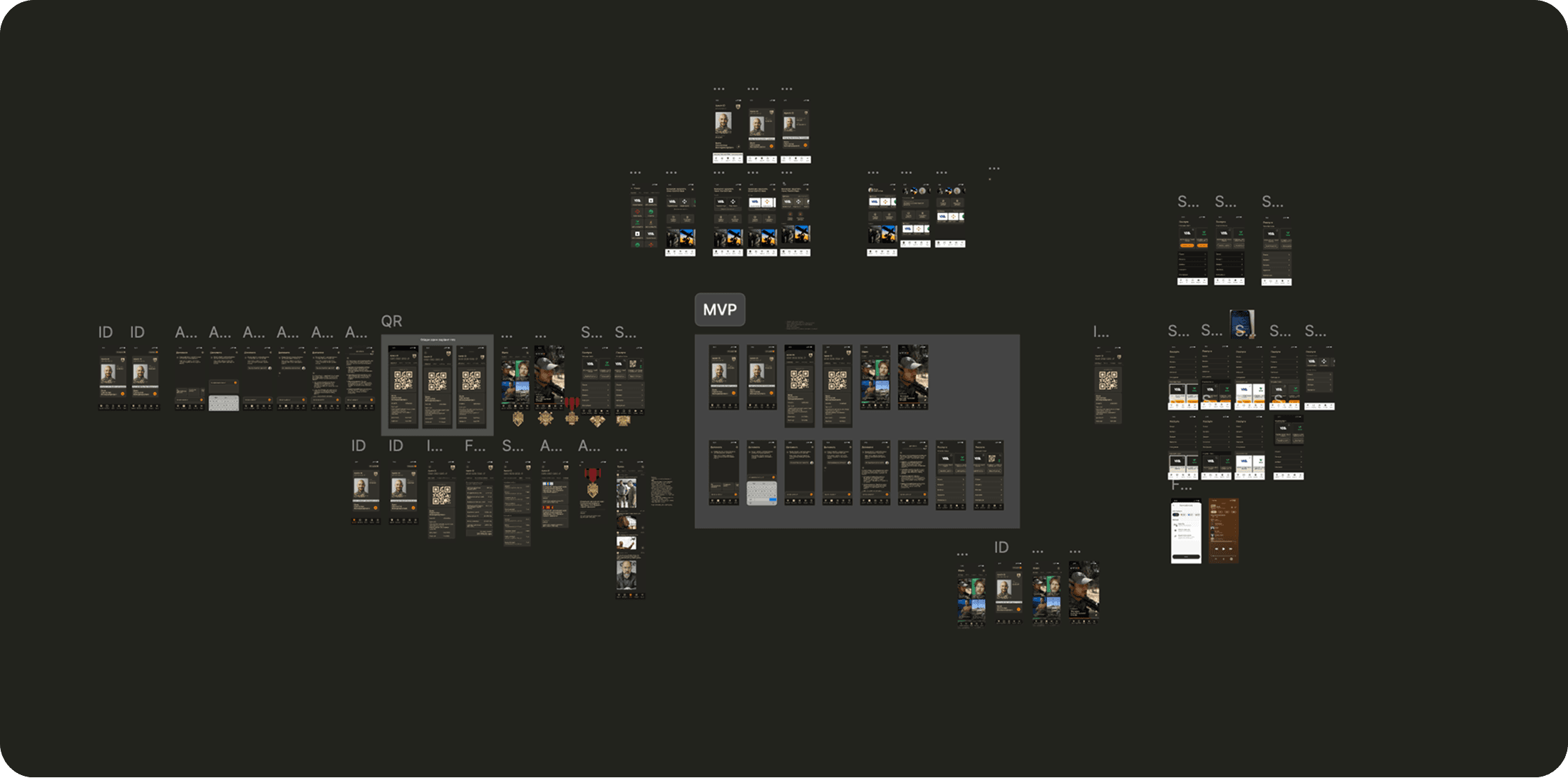
After I created the concept prototype, the MVP structure, and the core functional screens. Selective amount screens presented, not all from the prototype
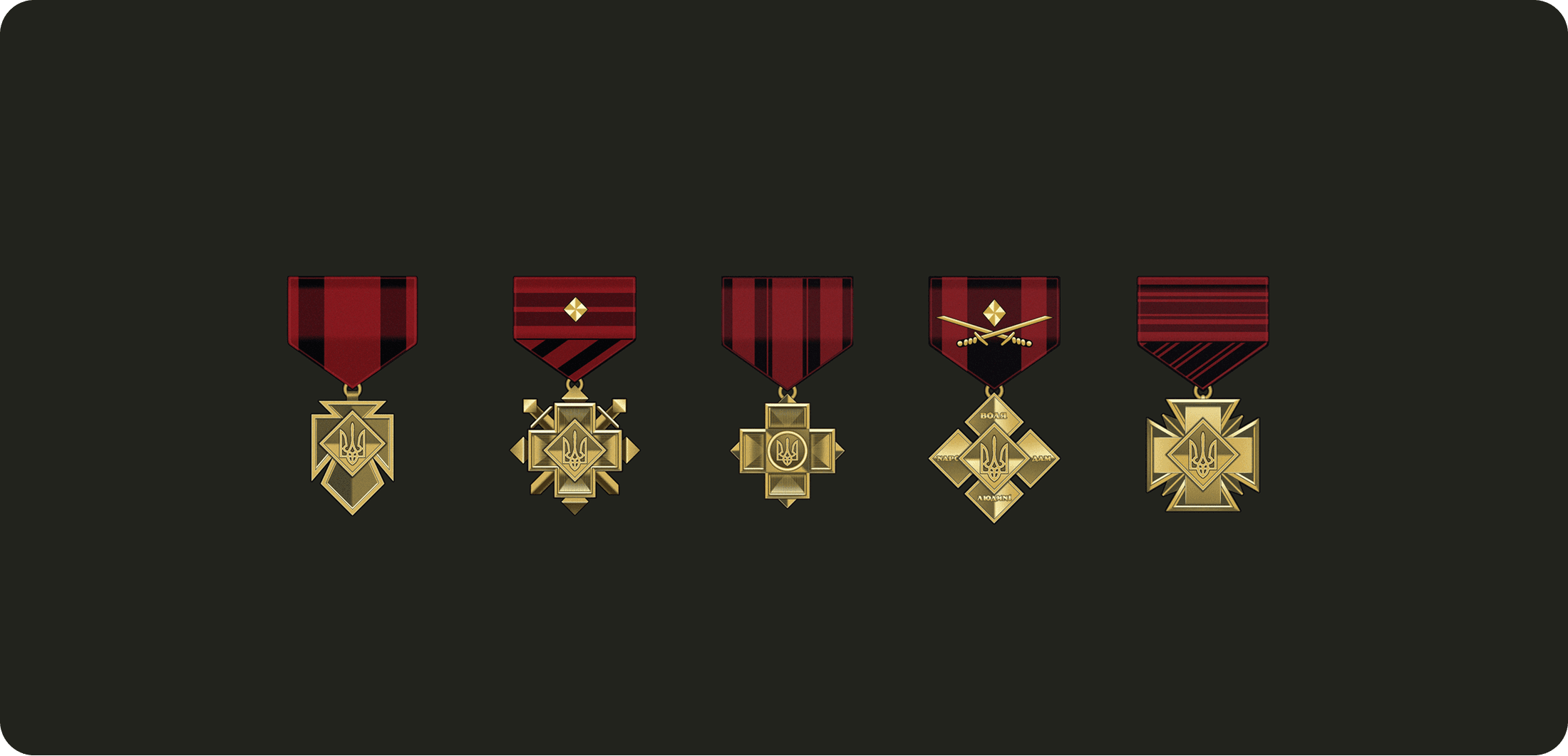
I also involved another designer to explore a concept for a consistent system of honors and awards that veterans receive for their service. The idea was to present these recognitions inside the portal, alongside the Digital Veteran ID, so that each veteran’s service and achievements could be represented with dignity and clarity.
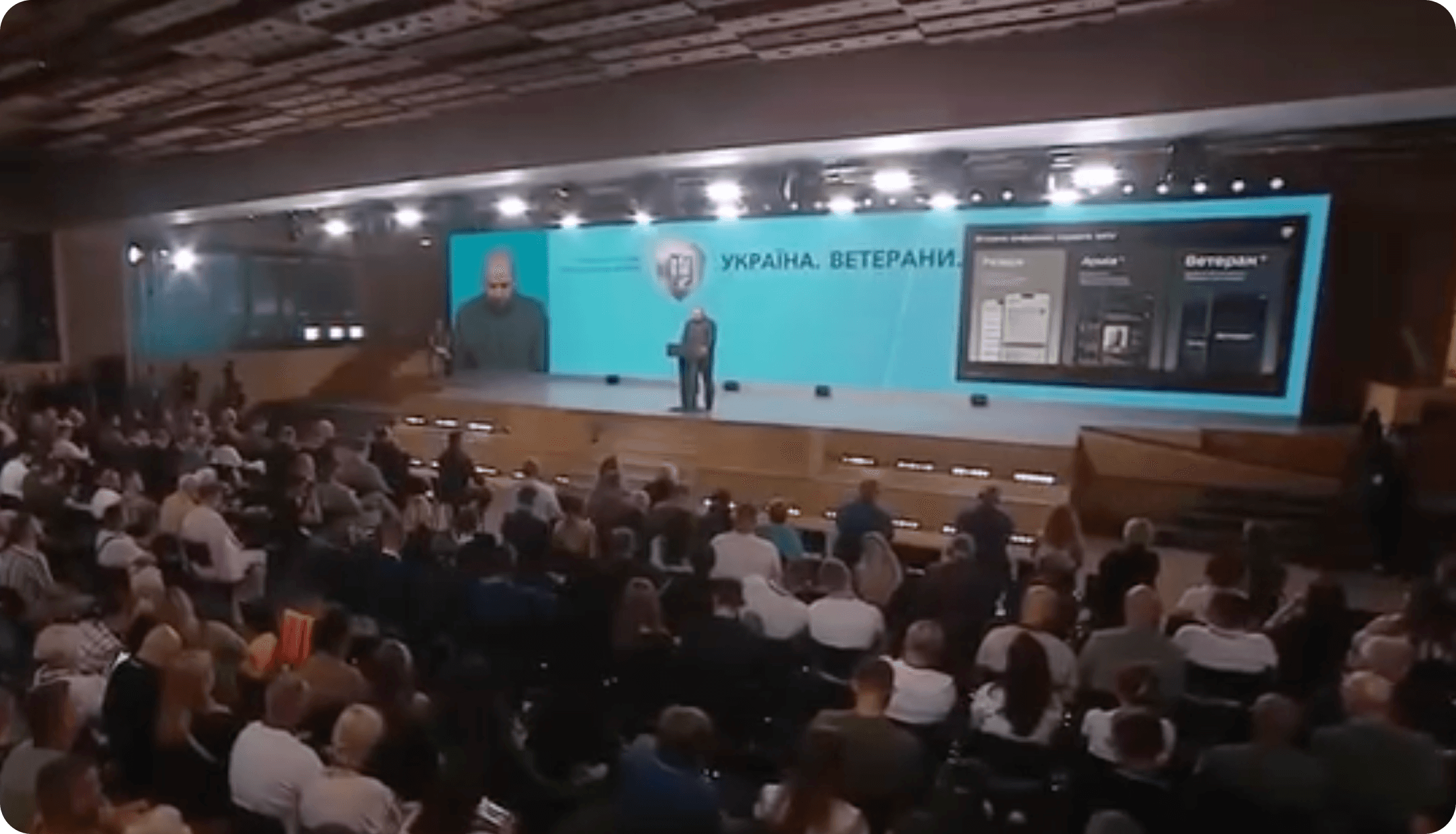
Parts of this work were later presented by the Ministry of Defense during an official public announcement.
Results and impact
Paper-based bureaucracy → Digital request and issuance, removing physical office visits entirely.
Verification time reduced from days to seconds through QR validation.
Projected adoption of 300,000 veterans in the first 3 months after MVP launch.
Validated and publicly supported by the Ministry of Defense, which presented parts of the prototype during an official announcement.
Established a scalable ecosystem blueprint: benefits map, community space, partner programs, family support, and reintegration tools.
Formalized accessibility standards for veterans with limb loss, trauma, cognitive load, or vision impairments.
Created alignment across government, designers, and engineering, enabling future national rollout in 2026+.
MVP: Digital Veteran ID:
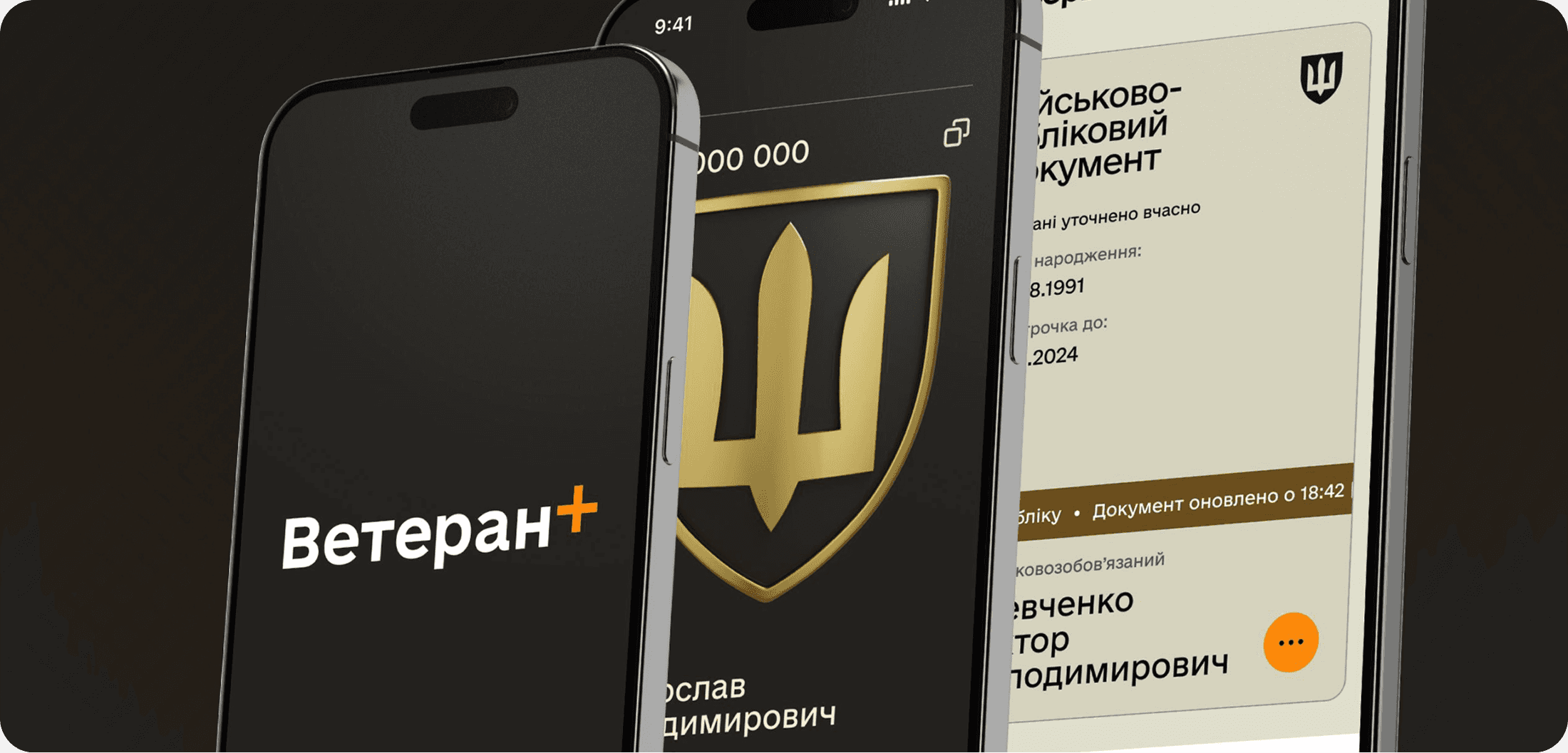
The MVP focused on what mattered most, verification. Veterans could open the app, request ID from database, and receive avoiding government offices. Their verified digital ID then could be found in app, and show as QR code for instant confirmation by officials.
Latest Projects.
Projects across discovery workshops facilitation, design execution, design leadership covering different levels of ownership and impact.