On-site Discovery for Digital Twin Pilot.
Scope
Client
Duration
Year
Industry
/
Problem statement
(01)
For over 3 months, progress on the Digital Twin project had stalled.
Due to limited access to data, architecture, IoT systems, common understanding form client side what are theirs actual needs of Digital Twin and key domain experts. This made it difficult to understand the facilities processes, business needs, and the overall semantics behind client’s Digital Twin concept.
Political dynamics and slow communication cycles further delayed decisions, with unclear ownership and responsibility across multiple stakeholder groups. As a result, 4 teams lacked a shared understanding of what the Digital Twin should represent, who it should serve, and how it should create value.
Discovery goal was to align four partner’s teams around a shared vision of the Digital Twin. At the start, there was no common understanding of what the Digital Twin was, what business value it could bring, or how it fit into existing systems. Communication was fragmented, access to IoT and architecture data was missing, and stakeholder roles were unclear.
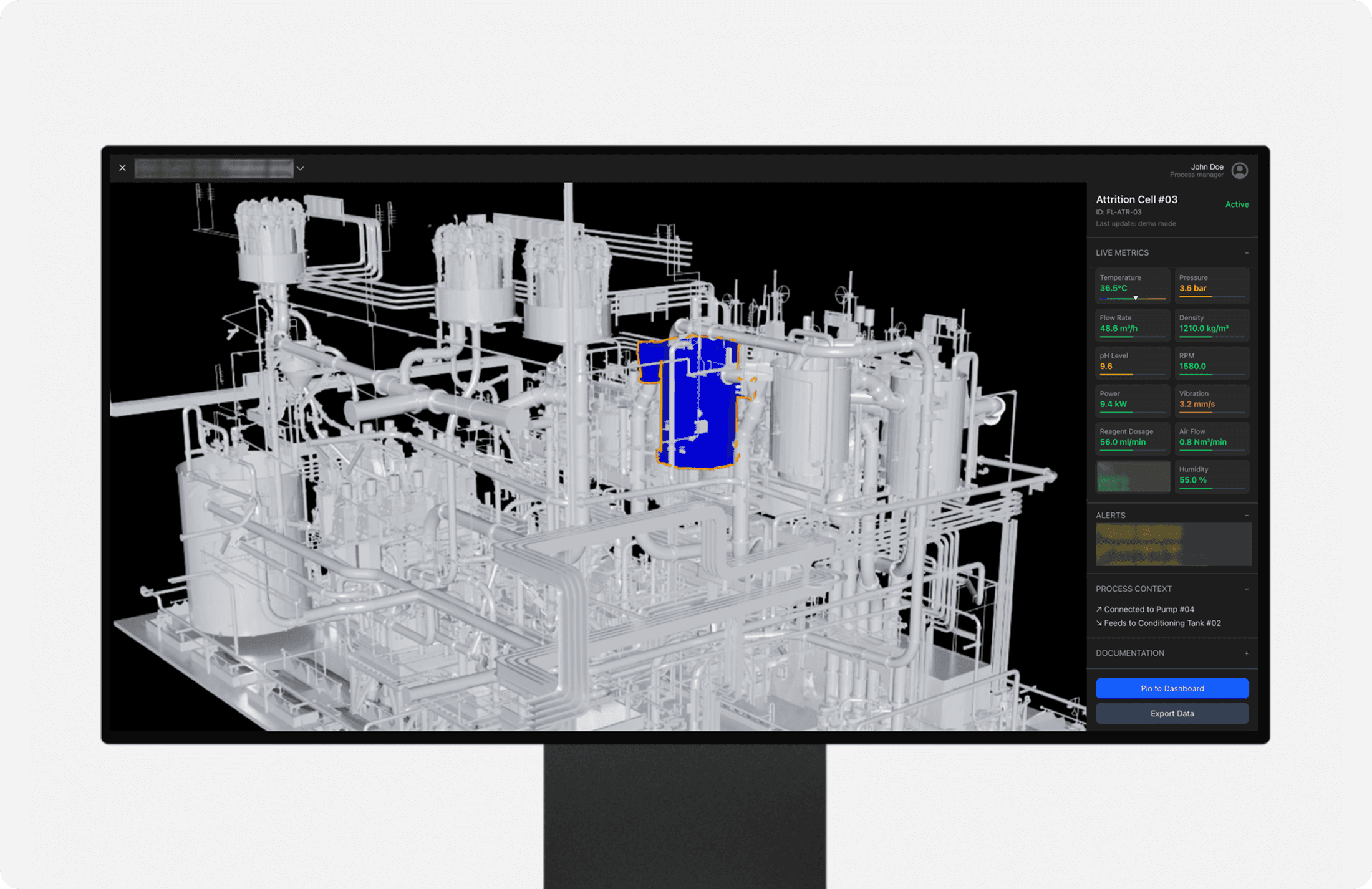
As the Strategic / Product Designer & Facilitator, I owned the framing and room cadence: setting the week’s objectives and agenda, converting opinions into decisions, and landing a pilot the org could actually ship. I also produced a low-fi real-time operations console prototype and user archetypes to align UI/UX with operational needs.
/
Goals
(02)
Objectives and Success.
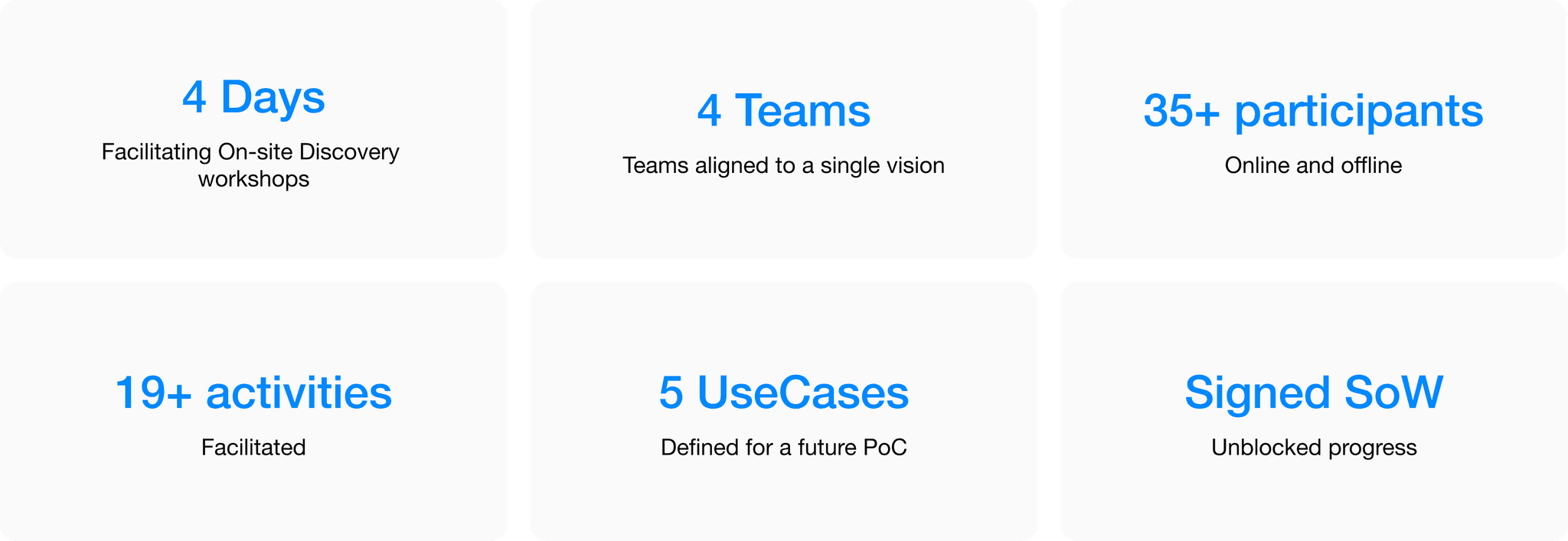
Identified potential area in facility process, defined several use cases and selected 1 as a focus case for a POC.
Agreed and sign the Pilot / MVP scope with a detailed SoW (boundaries, risks).
Close a decision log of key choices; align ordering and risk mitigation (roadmap).
Created a detailed Discovery report with key findings, insights, phases proposal and delivery roadmap.
Identify Users archetypes, theirs pain points, needs and Digital Twin UI functionality.
Detailed execution plan divided in 3 phases.
Defined a clear access path (systems, owners, status) to de-risk delivery.
/
Phase 1
(03)
Research.
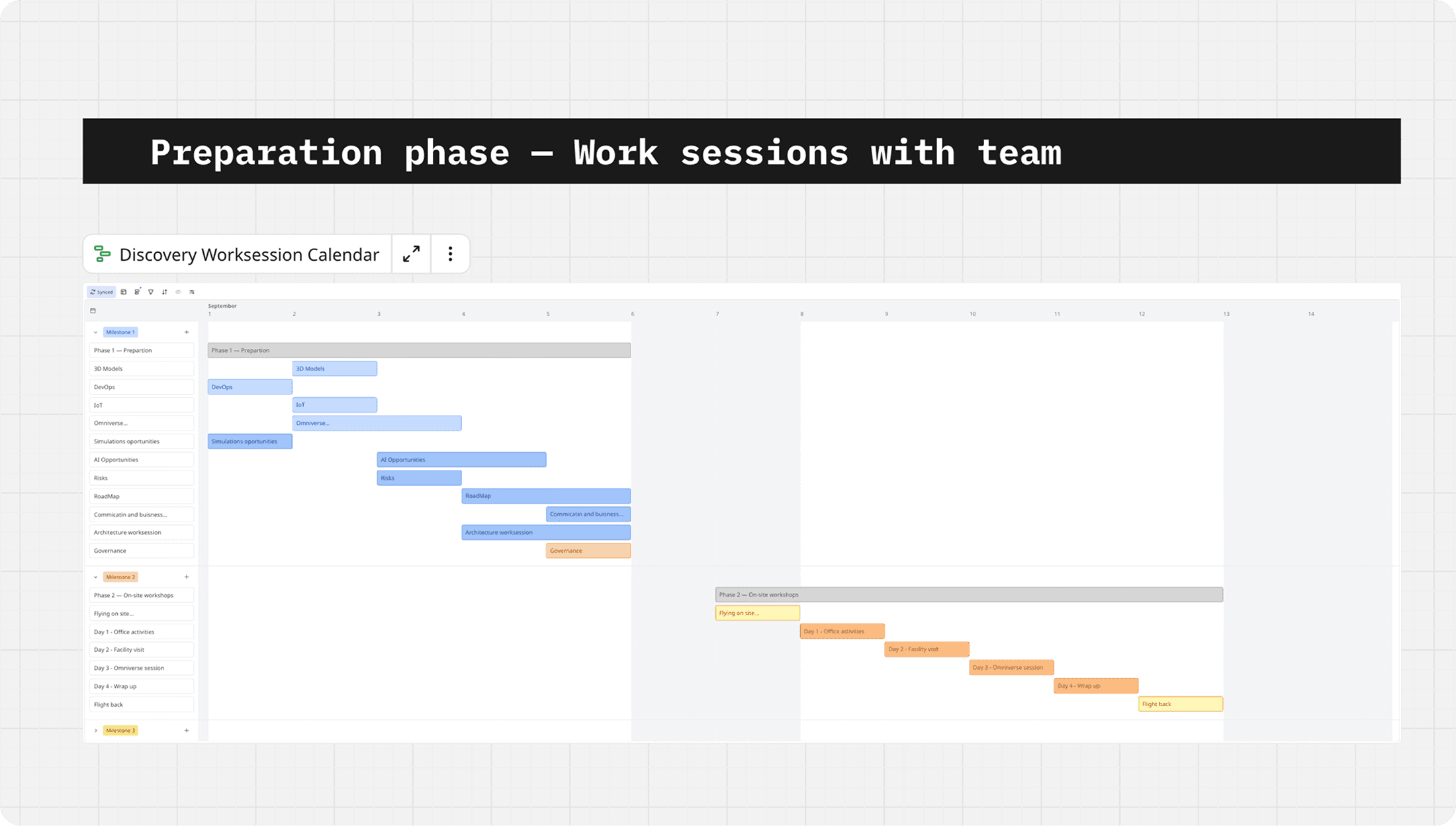
When I joined the project, I had no prior background in the mining industry, the client’s operations, or the current project state. The first week was dedicated to building a clear understanding of the domain and aligning internally before visiting on-site, to clearly document what every expert from the team needs to get from discovery, and align with every one to build agenda and pre-requested items before travel.
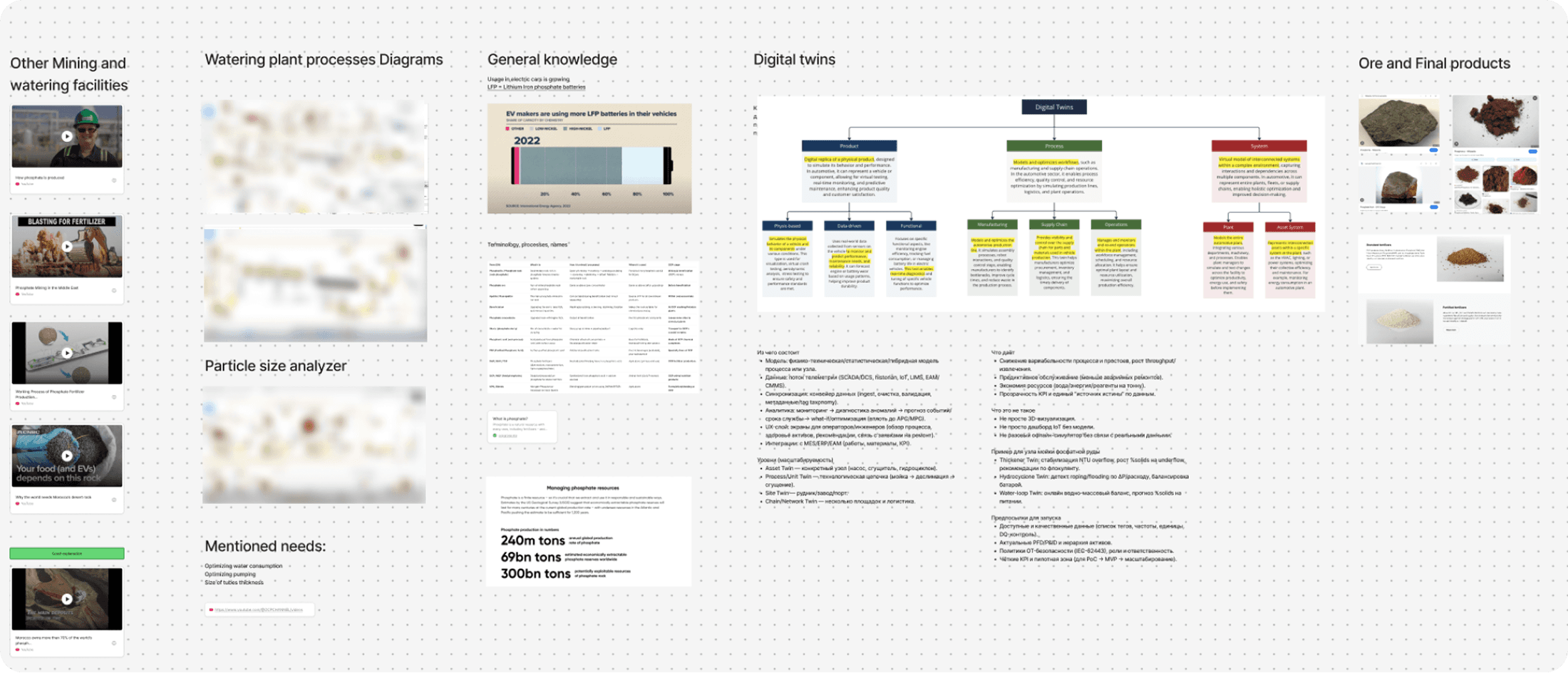
I scheduled one-on-one calls with all subject-matter experts involved in the project to quickly immerse myself in the context. In parallel, I began mapping the entire ecosystem on a Miro board, outlining facilities, production stages, extracted materials, product flows, and distribution chains based on both internal input and publicly available information.
To ensure consistent communication and shared understanding, I also created a terminology table capturing key industry terms, process names, and internal abbreviations. This accelerated onboarding for both myself and new team members, setting a common language before entering the workshop stage.
/
Phase 2
(04)
On-site workshops.
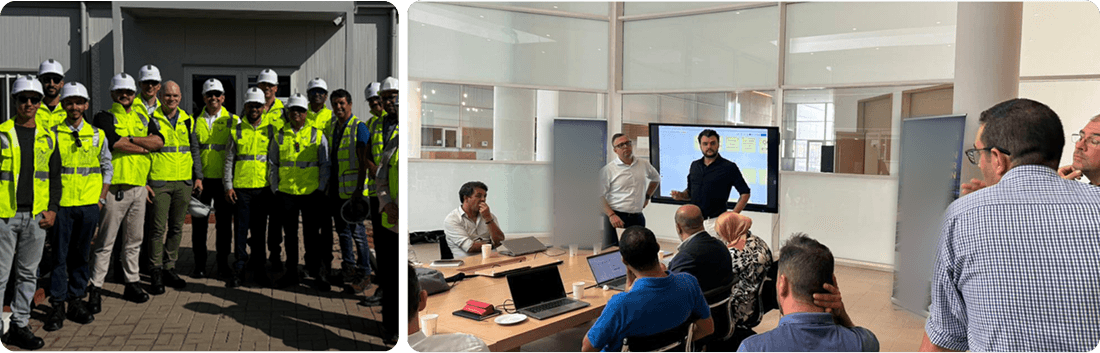
The biggest challenge was coordination: part of the team was online, part in different offices, and part on-site at the plant. Keeping the frame steady while everything moved was half the job.
4 teams and political
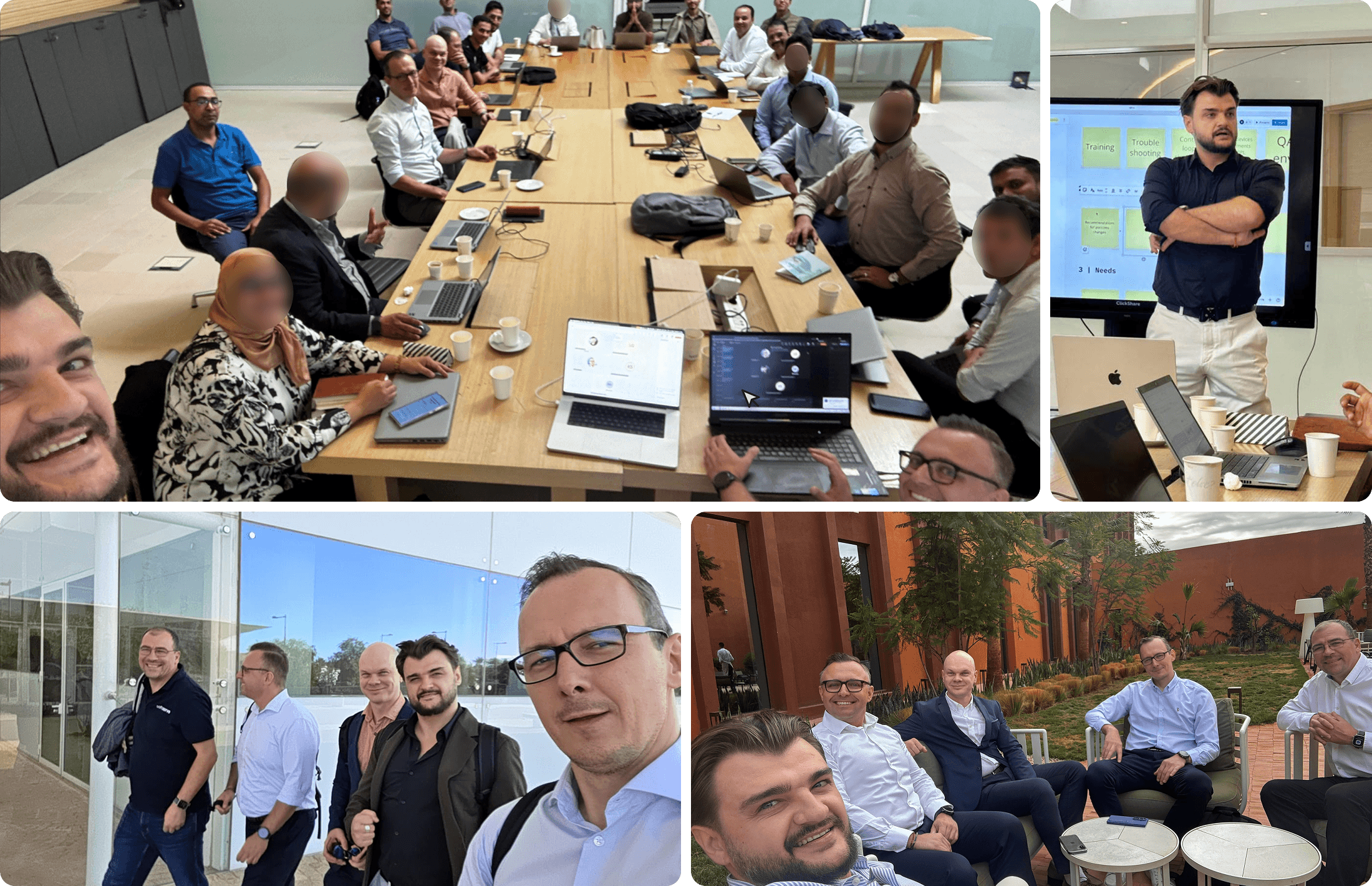
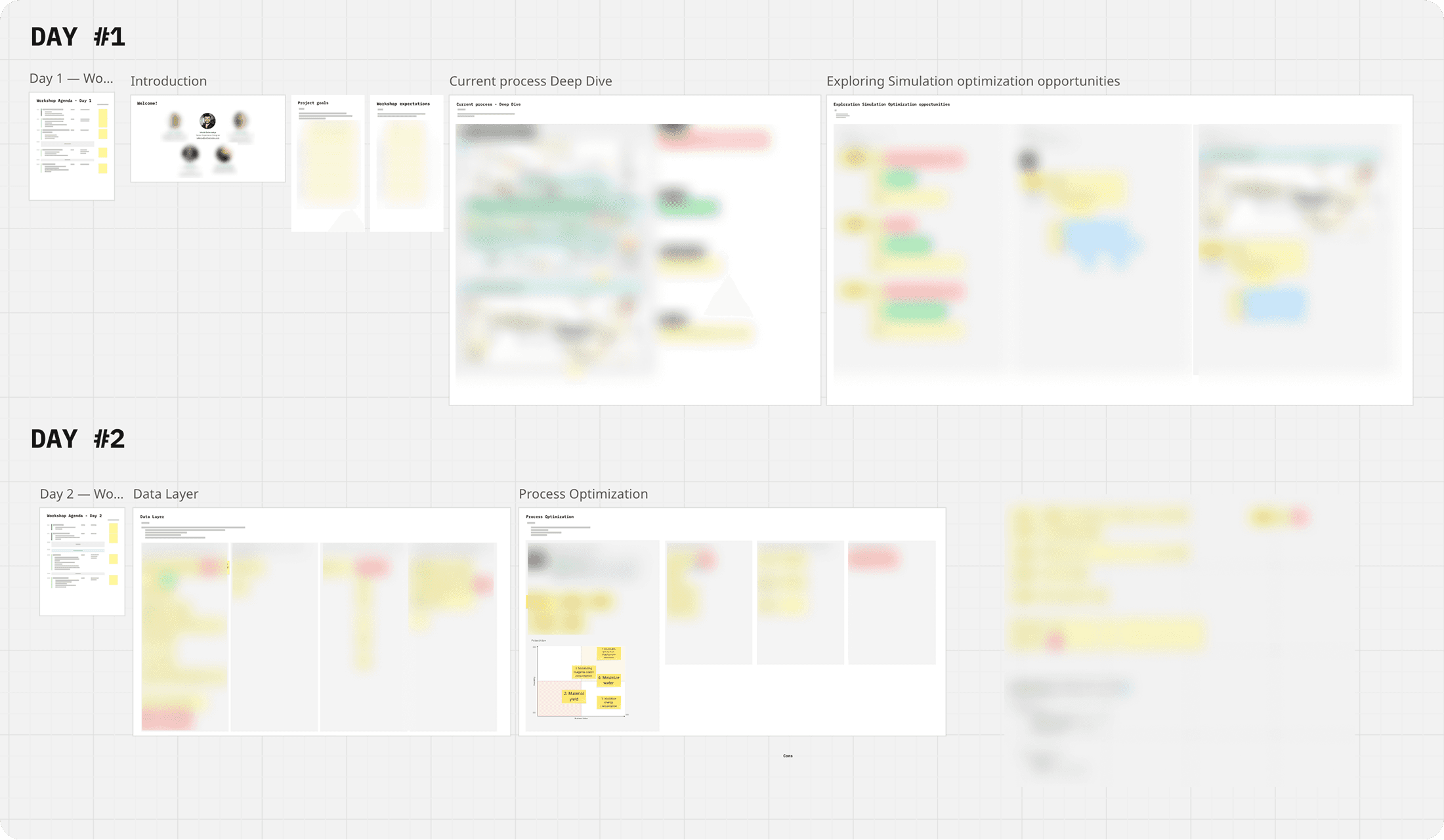
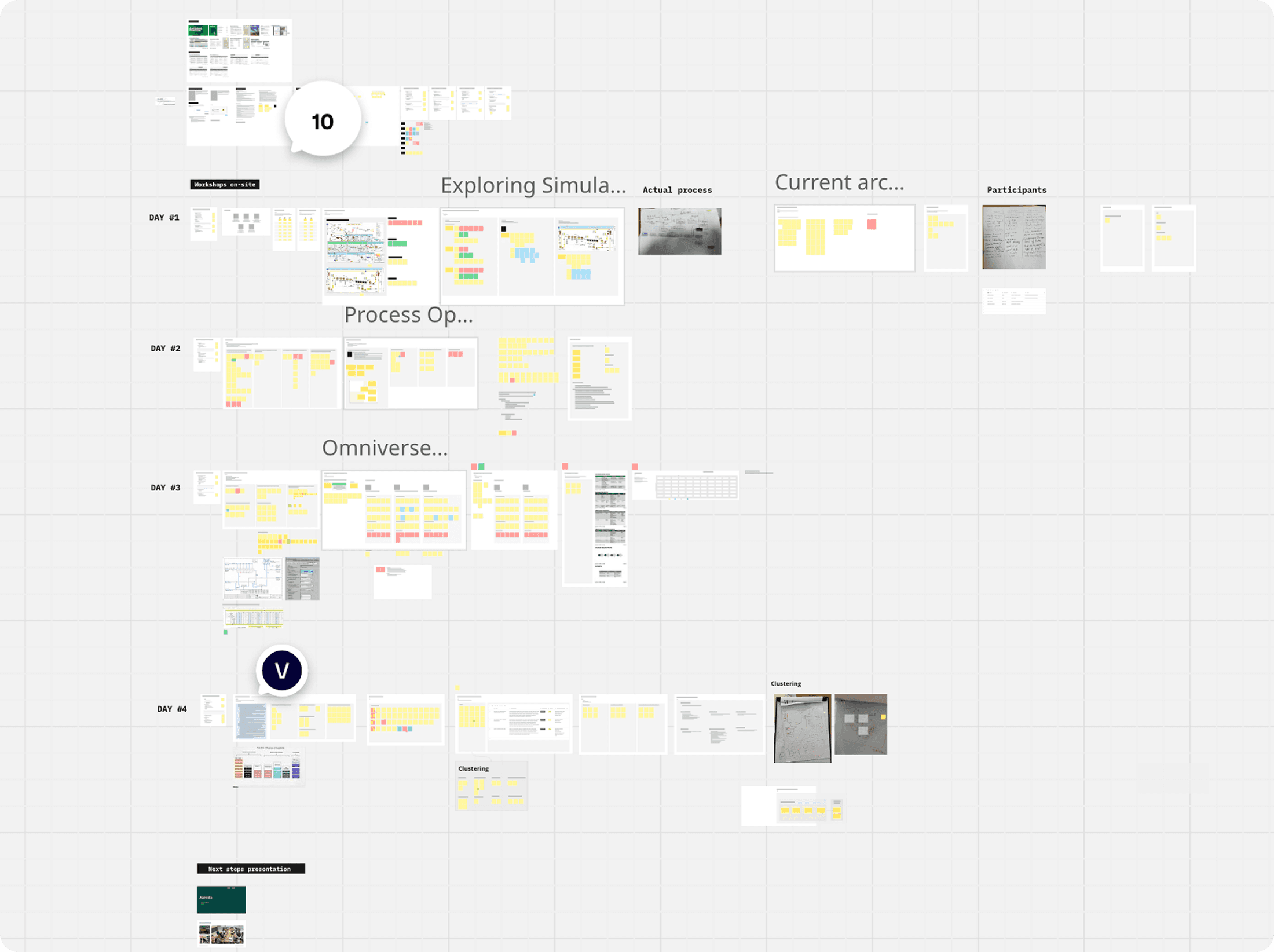
Over 4 days, I facilitated 19+ sessions with 35+ participants from engineering, IT, Robotics, operations, R&D, partners, engineers and others. The goal was to turn four disconnected silos into one team with a shared understanding of what the digital twin should achieve.
Few of the Key activities included:
Defined and prioritised 5 Digital Twin use cases across the facility.
Stakeholder mapping — identifying decision-makers, influencers, and blockers.
Business value mapping — defining what success actually means for each team.
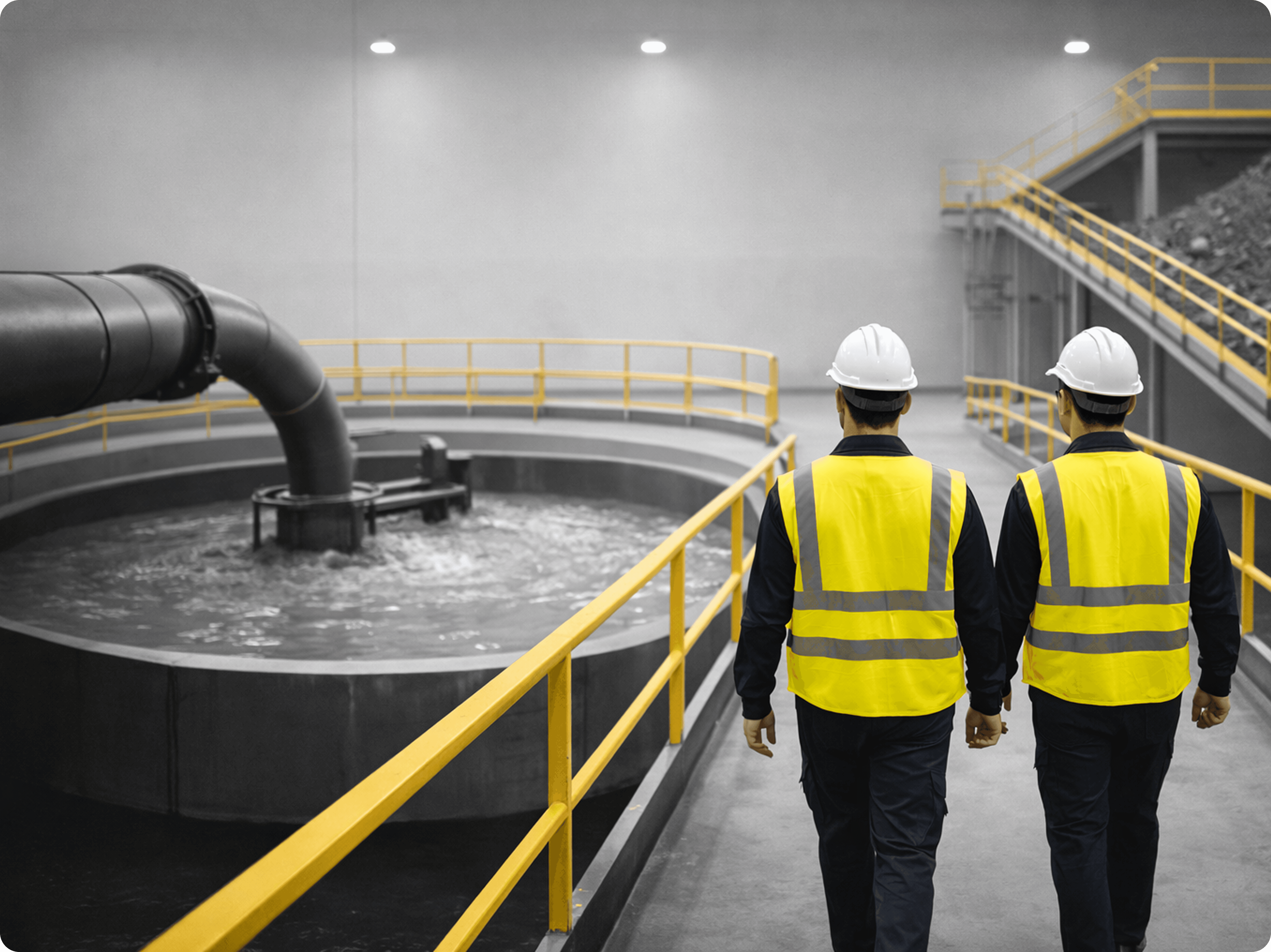
Real Process walkthroughs — visiting the plant and observing how operations work in real time then recreating it.
Data-digging sessions — listing data sources, system owners, and existing gaps.
AI & IoT exploration — identifying automation and analytics opportunities.
User archetype mapping — clarifying how different roles would interact with the twin.
Prerequisite and request lists — documenting what data, tools, and access were needed to move forward.
Prioritisation & roadmap sessions — aligning on the first pilot use case and timeline.
/
Phase 3
(05)
Final report.
After the on-site, we had to make sense of all the gathered data and insights.
My focus was to align our experts around one story and turn our findings into a report with a PoC proposal and help program manager to prepare clear next step for the client.
I ran several working sessions with our internal team to bring all perspectives together — business, engineering, data, and visualisation. Everyone had their own angle, so my task was to connect them into one storyline that answered three key questions:
What did we actually learn?
What does it mean for the business?
What should happen next?
Key activities:
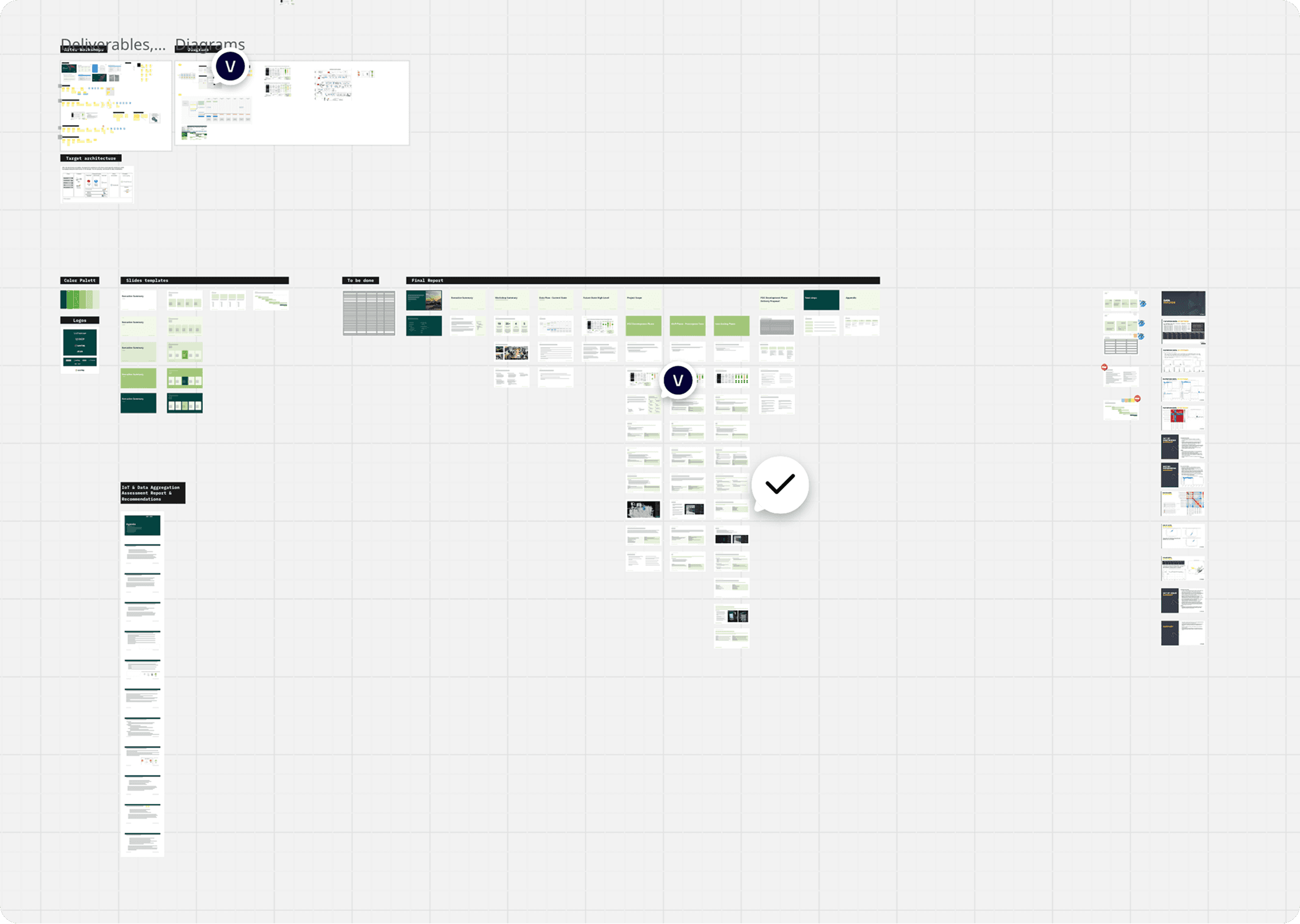
Consolidated all insights and structured the Discovery Report narrative.
Facilitated several working sessions to align business, data, and tech perspectives.
Created a UI prototype and visual kit for presentation clarity.
Co-authored the Discovery Report, Proposal, Roadmap, and POC scope.
/
Summing up
(06)
Results & Impact.
Created detailed report with jey insights and outcomes form discovery.
Defined and prioritised 5 Digital Twin use cases across the facility.
Aligned 4 cross-functional teams under a shared vision of the Connected Twin.
Created initial UI prototype for real-time data monitoring in Omniverse.
Delivered SOW with a roadmap for pilot implementation
SOW has been signed few days after the presentation session
The signed SOW unlocked the pilot phase, securing client’s trust and ensuring continuity for the next 6 months roadmap.
Reflection.
This project made me realise how much I’m driven by client-facing work. Business is made when people meet, not in endless online calls or email threads.
On-site, everything changes: communication becomes faster, politics fade, and trust starts to build. When clients see that you genuinely care, that you want to understand their processes and help them make better decisions, they open up.
That’s where strategic design begin, in creating clarity, trust, and shared direction between people who build and people who decide.
Latest Projects.
Projects across discovery workshops facilitation, design execution, design leadership covering different levels of ownership and impact.