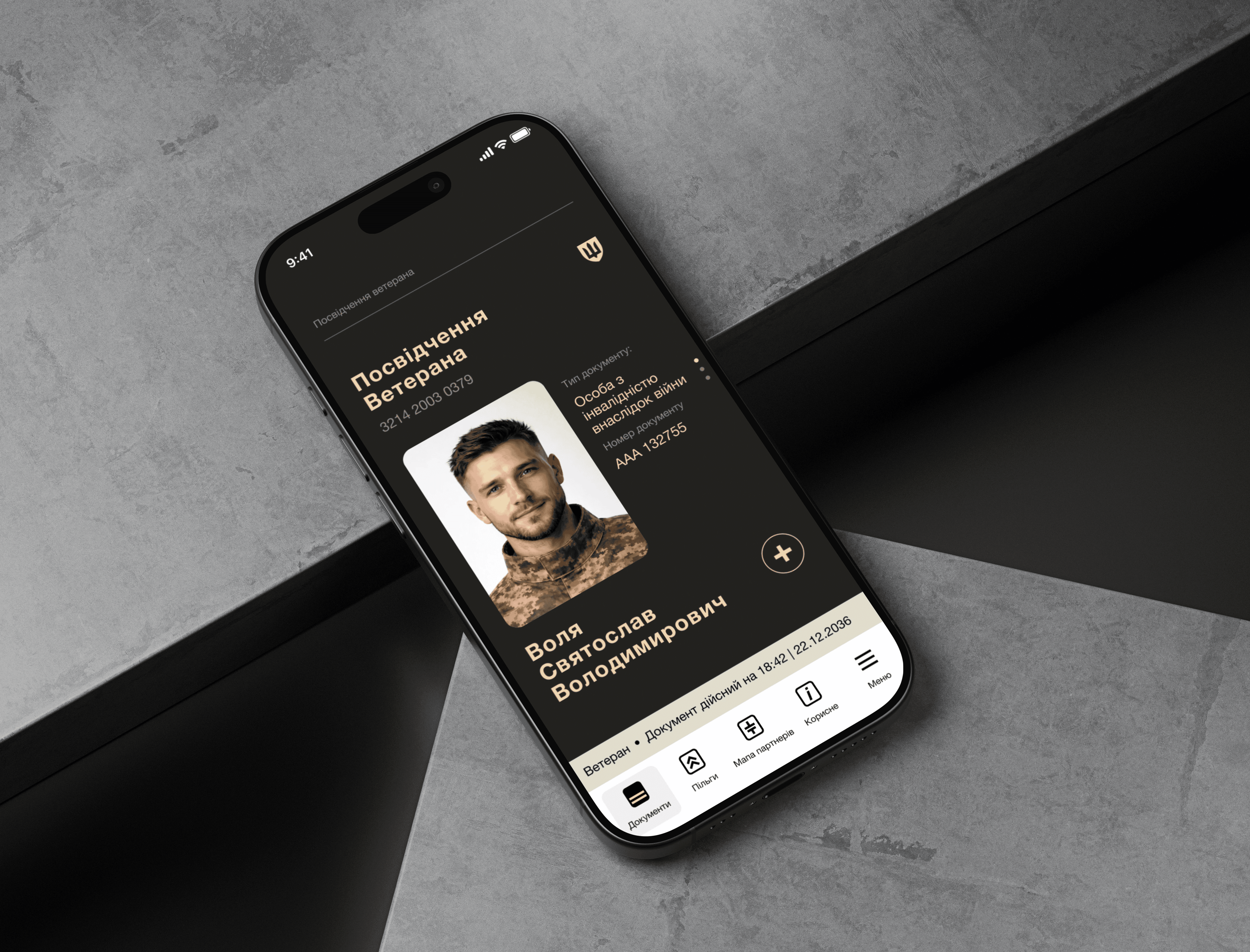
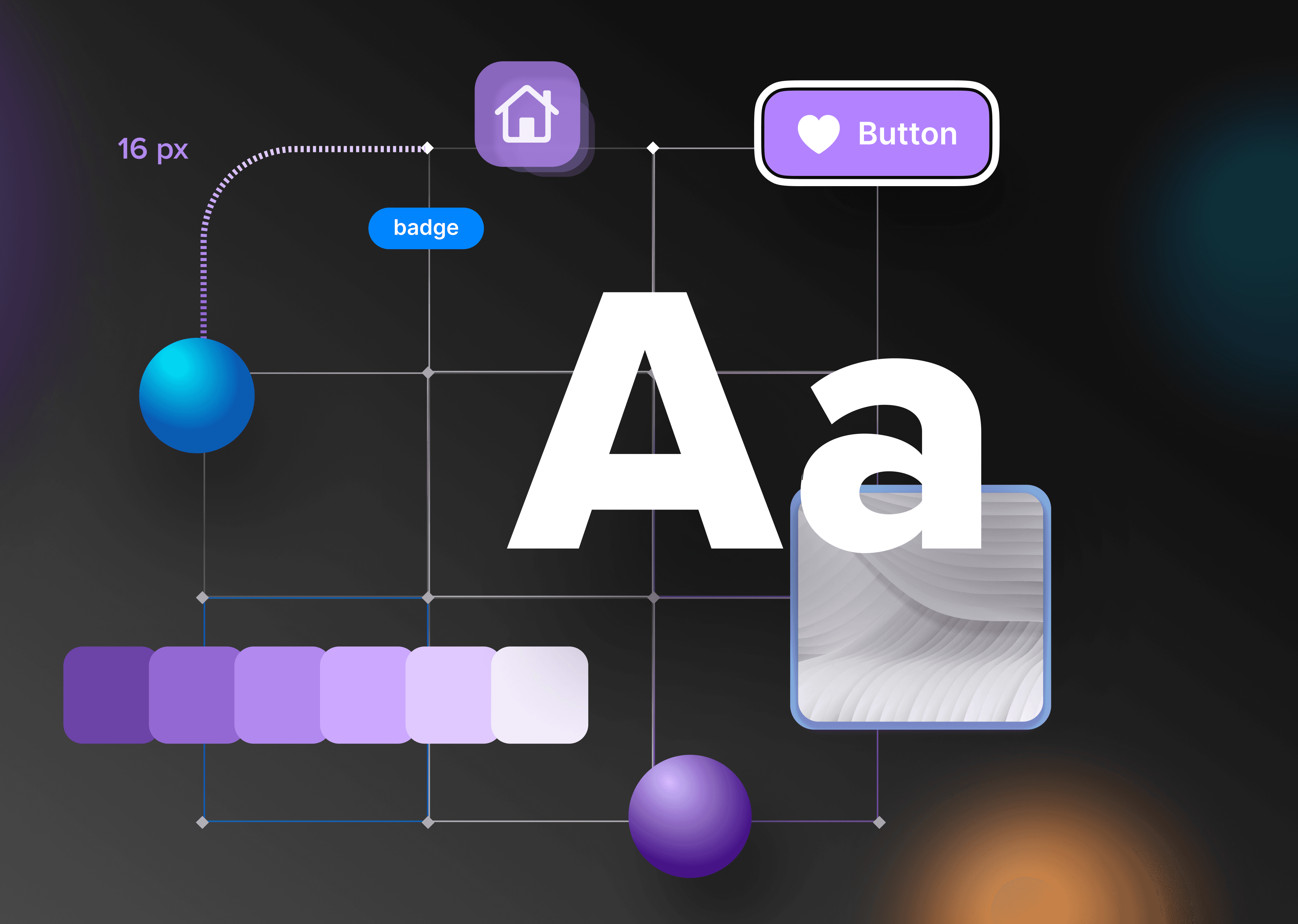
Complex Design System for Umbrella-type Enterprise.
We collaborated with Oura to refine their brand visuals and redesign their website with a focus on clarity, calm, and ease of use.
Scope
Client
Duration
Year
Industry
/
Executive summery
(01)
This initiative started when I joined a different project
Designing a new B2B/B2C real estate platform for an umbrella enterprise running 10+ digital products. While working on that platform, I realised there was no shared UI kit, no design system, and no owner of consistency, each product looked and behaved like it came from a different company. I turned that gap into a proposal, traveled on-site to the clients office, and presented a solution for a centralised design system which could scale to the entire enterprise, backed it with a cross-product design audit, and proved the concept by building and test it.
/
Problem and Opportunity
(02)
No Centralized Design Foundation
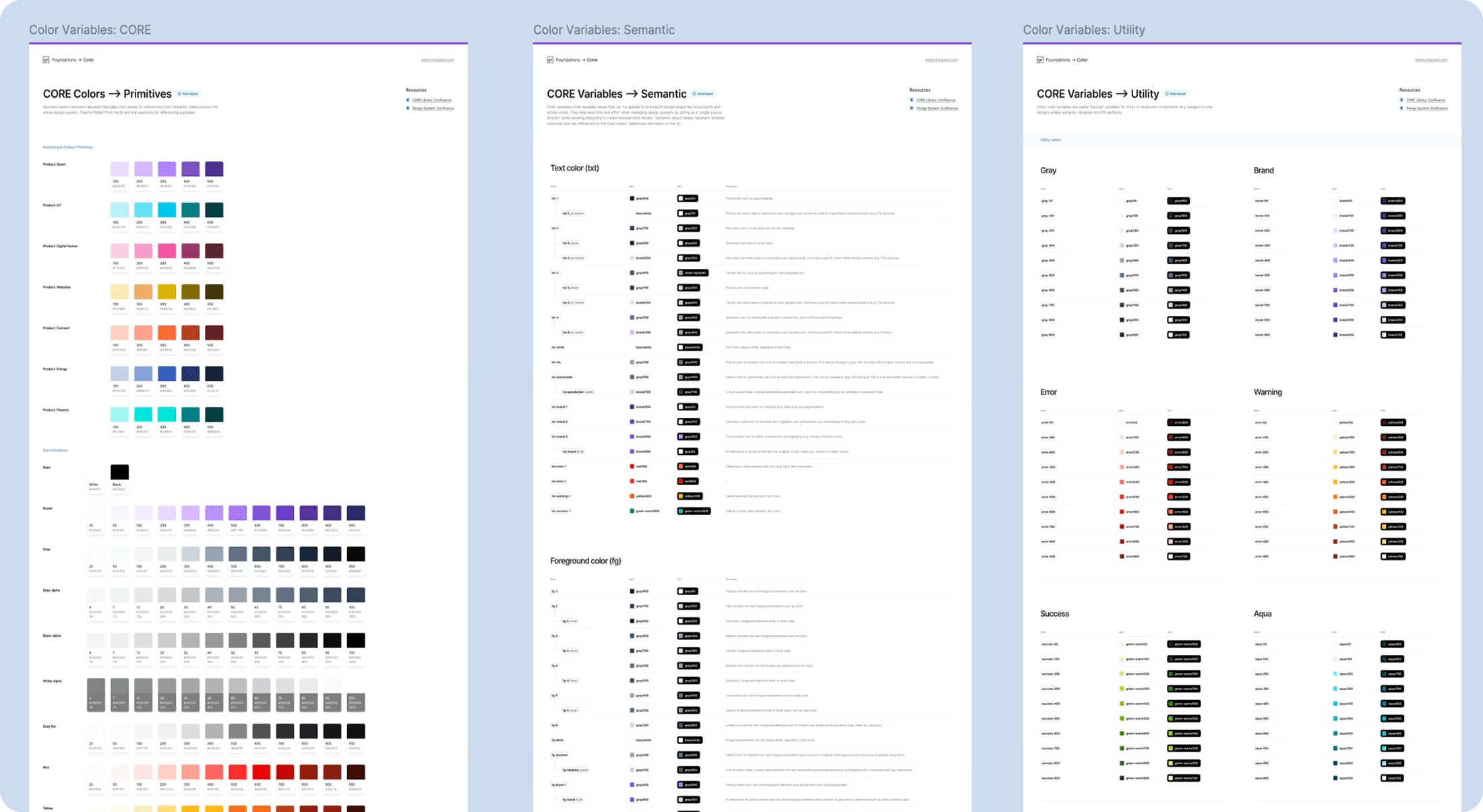
When I started working on the brand new B2B /B2C platform I went looking for the basics: colors, typography, component library, usage rules. There was nothing central:
No official UI kit.
No shared design system.
No clear owner of consistency.
Every product team and vendor had reinvented the brand and UI elements:
Different color palettes, type scales, and spacing systems, components, patterns.
Multiple variants of basic components (buttons, inputs, cards, filters) with different behaviors.
Different interaction patterns for the same tasks (search, filter, view listing, manage portfolio).
From the enterprise perspective, this had never been framed as a project. They “felt” the fragmentation but had no time, owner, or structure to fix it.
Opportunity I saw:
Turn an unowned pain “yeah, everything’s inconsistent” into a strategic initiative.
Use my B2B/B2C platform as a proof-of-concept by building new scalable UI kit that will be a new look and feel example for all enterprise products.
Scale that into a Core Design System to cut cost and time of every future product and feature.
/
Approach and Execution — Step 1
(03)
Portfolio audit and narrative
I assembled a small design squad (myself + 2 other designers on our side) and led a portfolio audit:
Requested access to the key Portals, products, and internal tools.
Divided products between us to review 10+ products across web, iOS, Android, internal SaaS.
Defined how we would document:
Screenshots of core flows and screens.
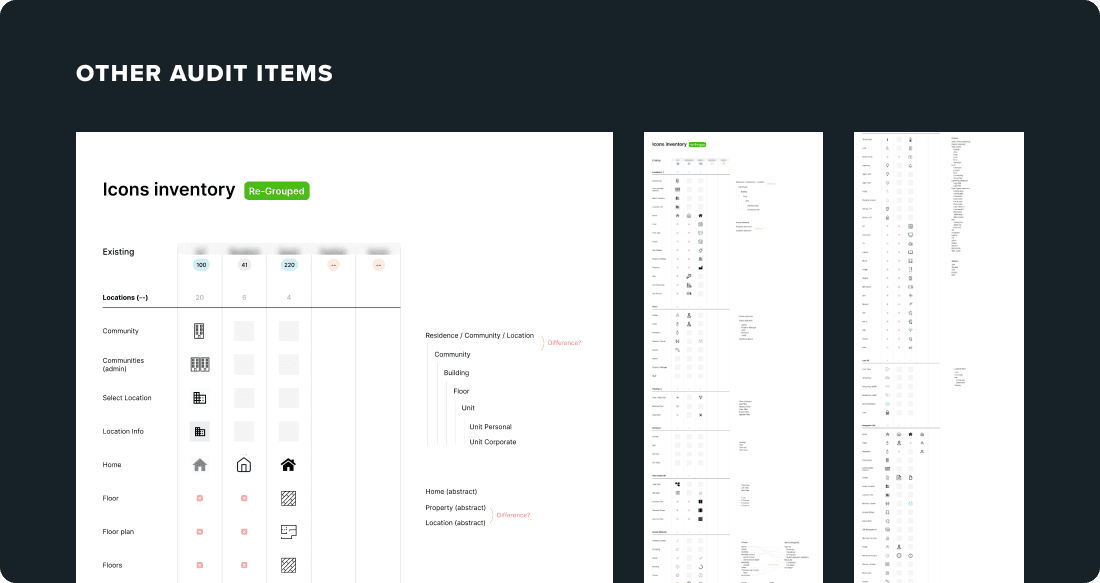
Component inventories per product.
Heuristic notes on UX and patterns.
My role was to:
Lead initiative.
Set the audit framework and standards.
Delegate product slices to designers and vendors.
Review the findings.
Travel on-site with business value proposal.
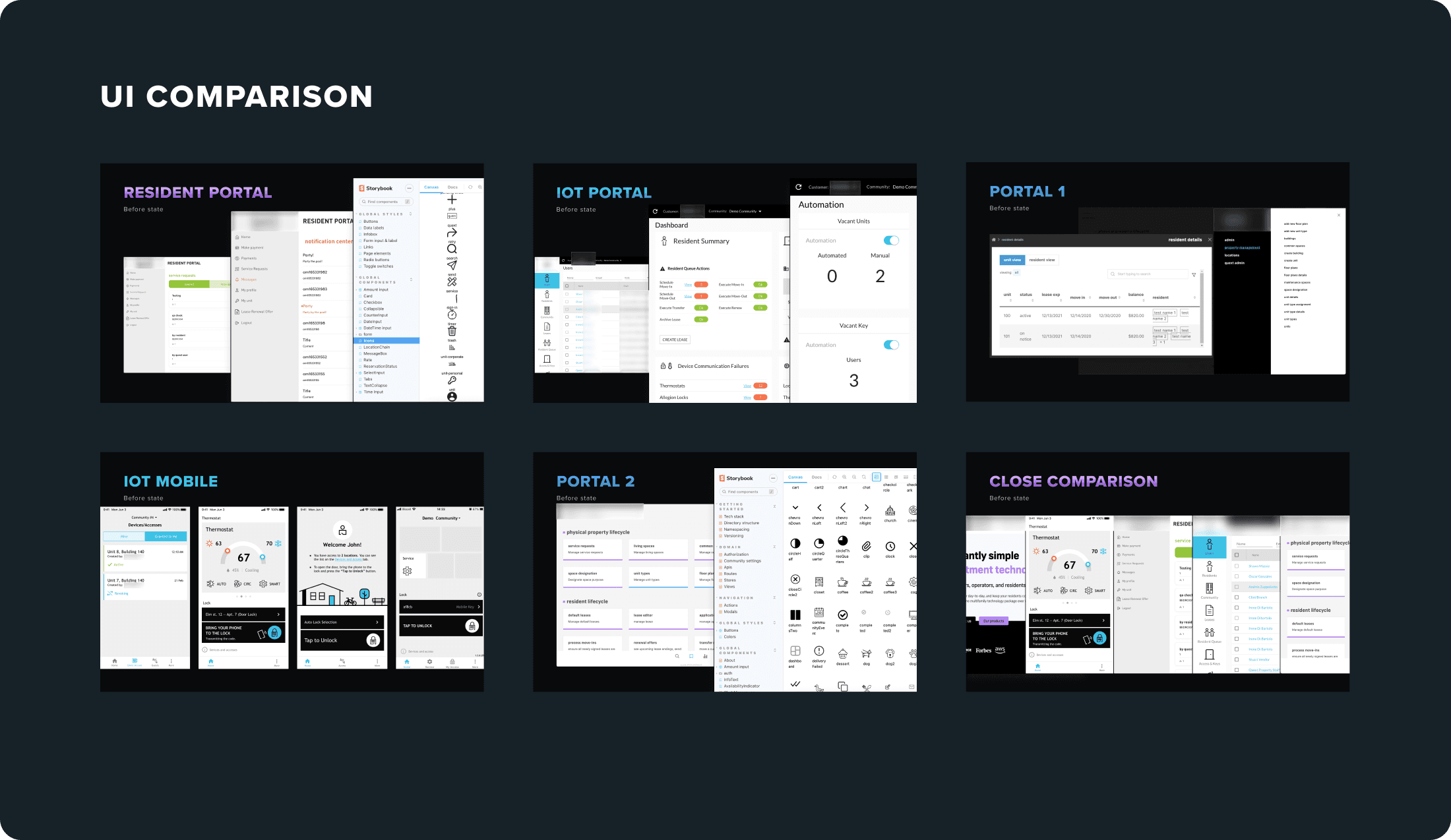
I’ve pulled everything into a structured deck:
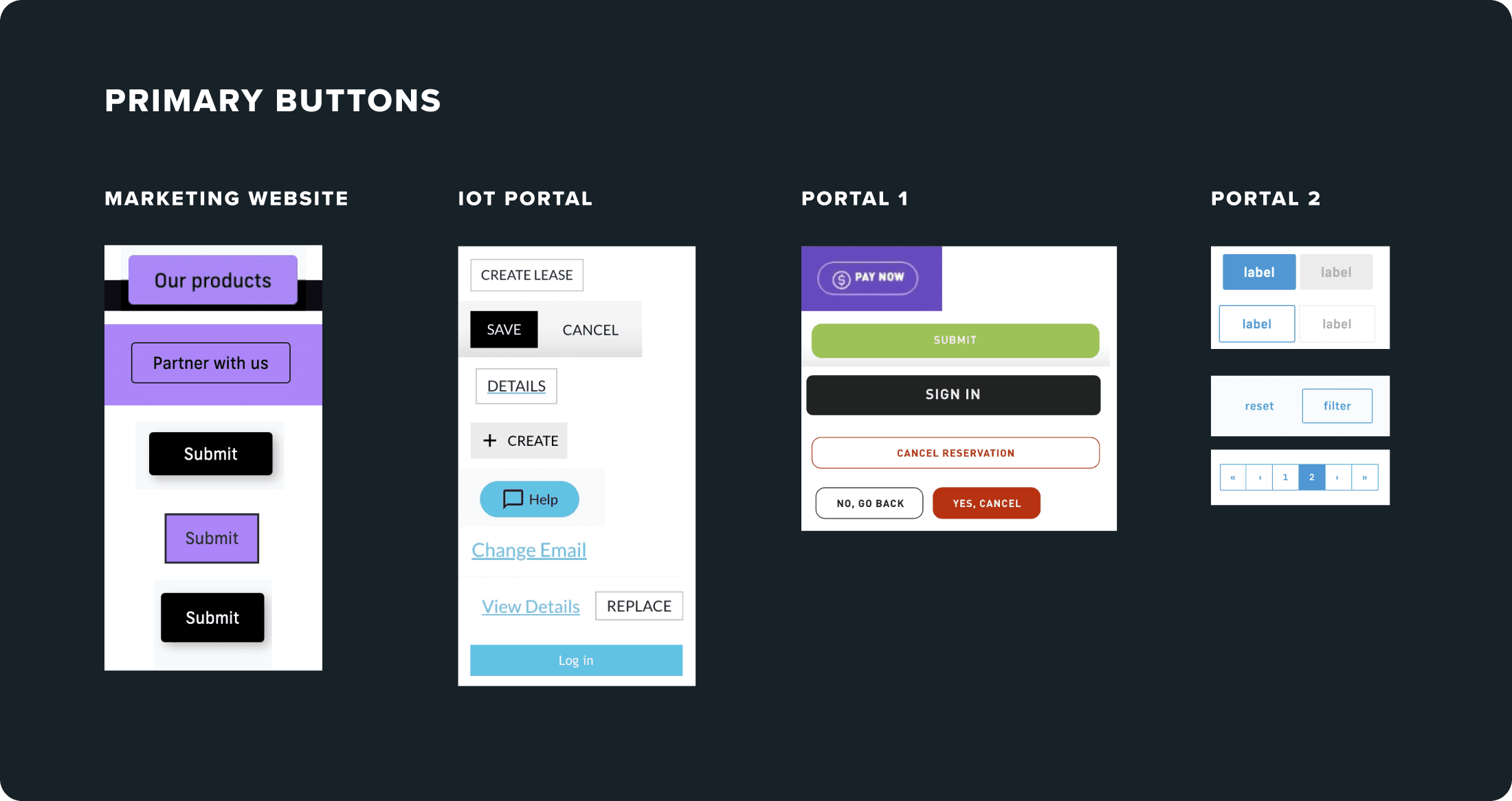
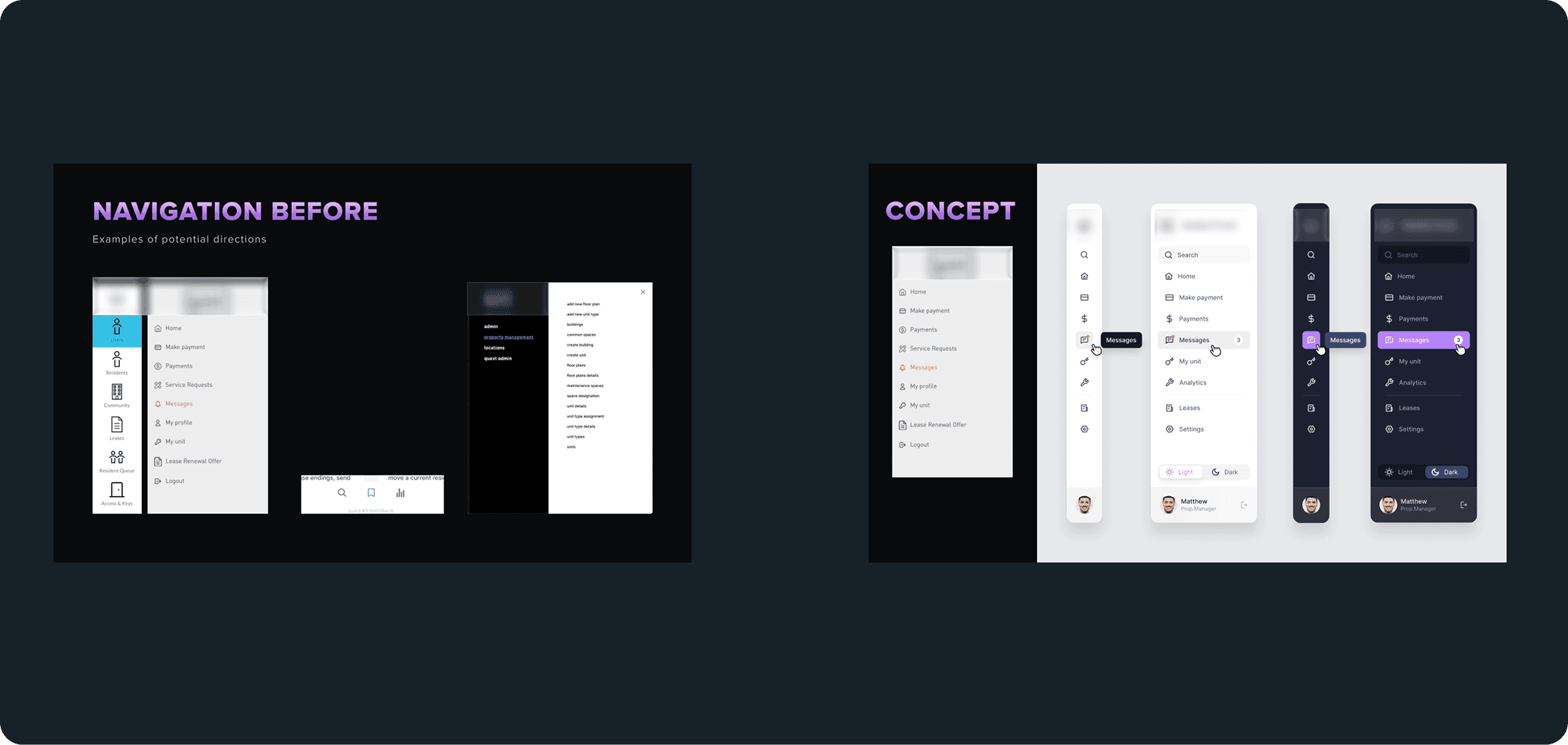
Side-by-side comparisons of the same pattern across several products.
Callouts showing how “the same button” appears in four different styles and behaviours.
A clear mapping of inconsistency → cost and risk:
Extra design/dev time per feature.
More bugs and rework from bespoke components.
Higher onboarding / training cost.
Fragmented brand perception.
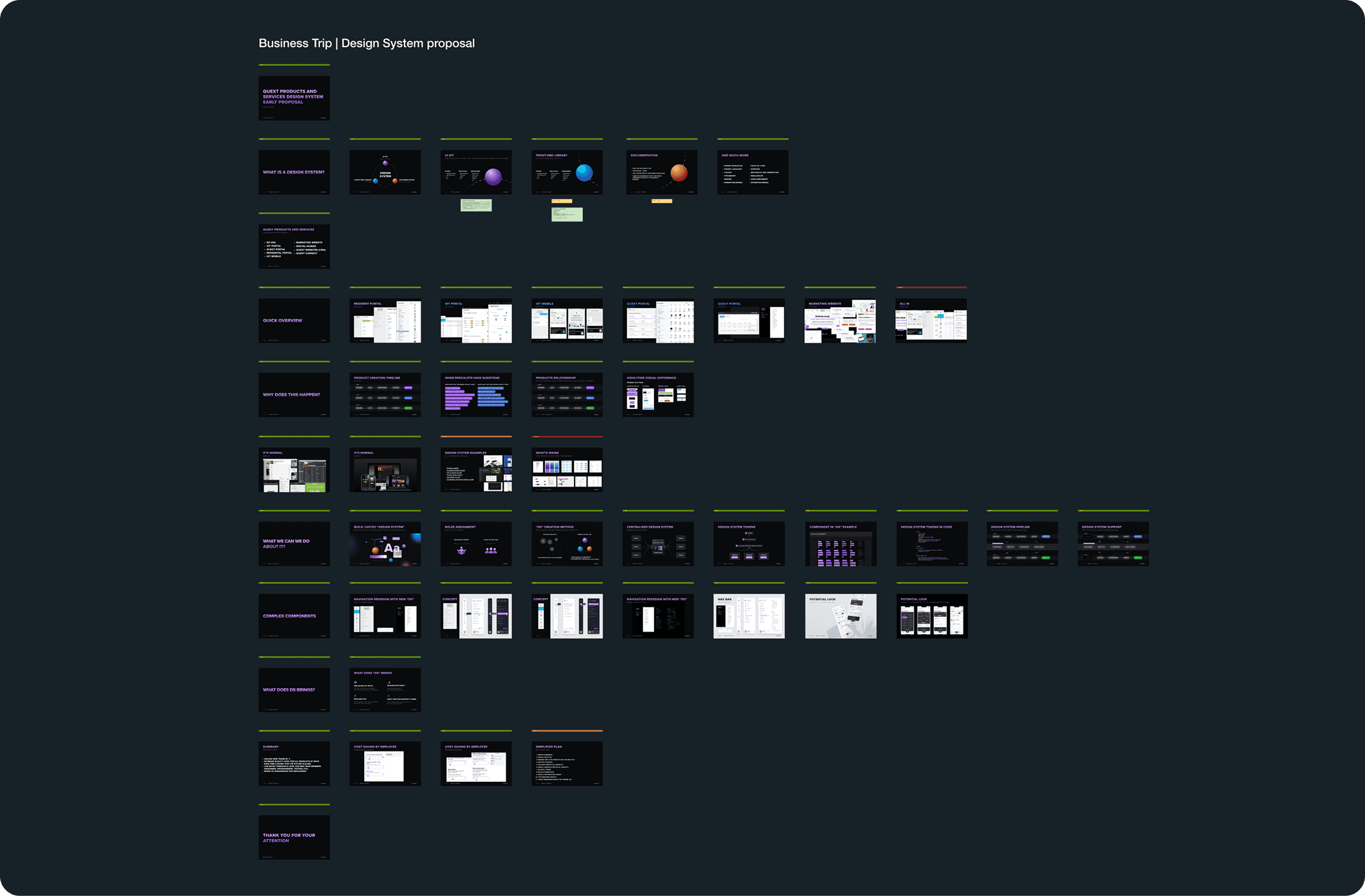
I flew to the client’s office in US and presented the audit to the business stakeholders, with key findings and Proposal of building a Complex Design.
/
Step 2
(04)
Proposing a design system approach
With the diagnosis on the table, we had to decide what to do.
I framed three options:
Keep patching product by product → low change, ongoing chaos.
Attempt a Big-Bang redesign of everything → high cost and risk, unrealistic.
Invest in a central design system and roll it out with → medium effort, compounding returns.
Stakeholder concerns:
“We don’t have time for a big DS project.”
“How will this work with multiple vendors?”
“Will this slow product teams down?”
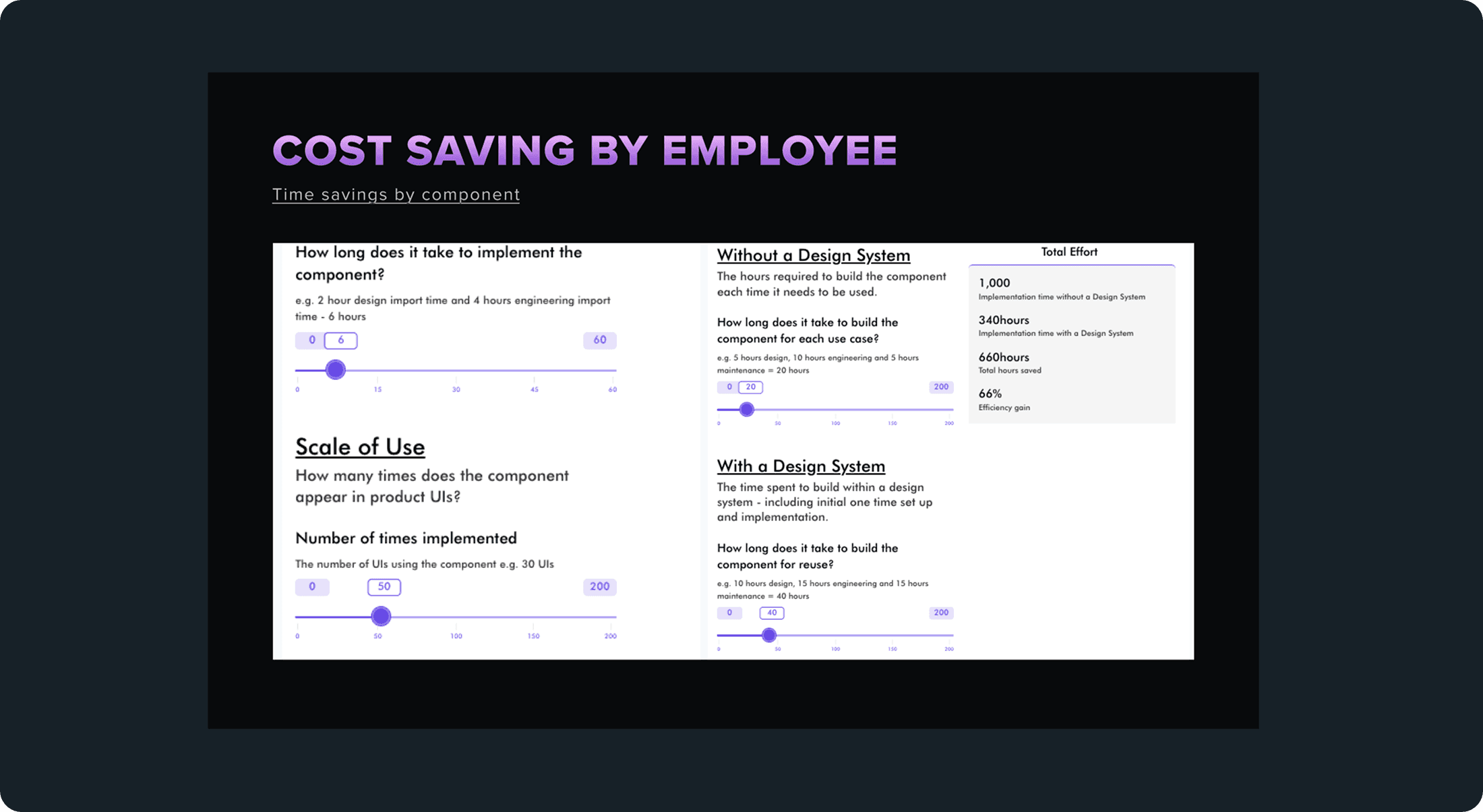
“How much it will coast us, and why should we invest in this?”
I positioned the design system as:
Infrastructure, not decoration:
One central investment, amortized across all products.
Lower marginal cost per new screen / feature.
A way to make vendors interchangeable:
Everyone builds from the same design and code assets.
A risk-control mechanism:
Fewer bespoke solutions, fewer surprises.
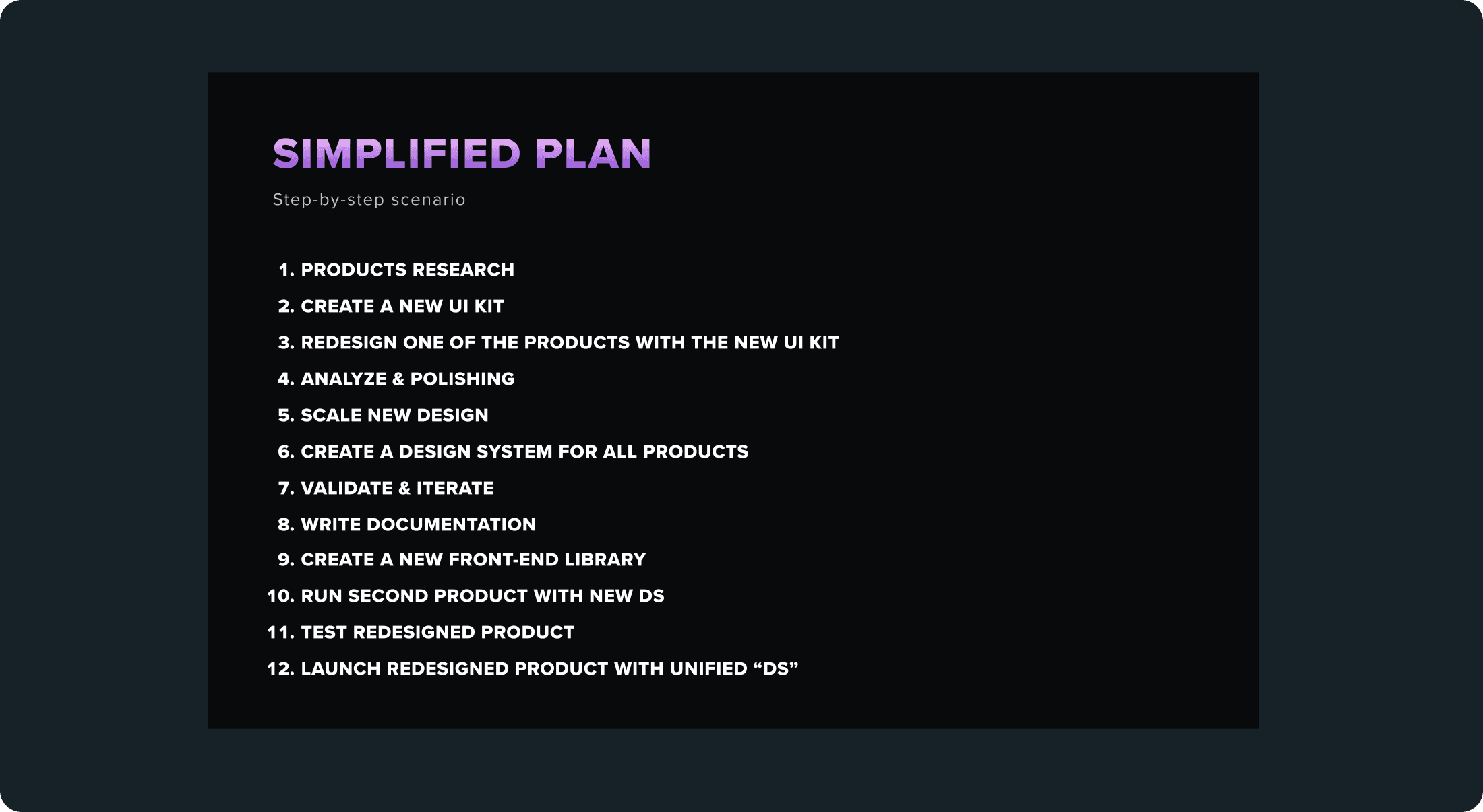
The client agreed to move forward with a design system, under one condition: we had to prove value quickly on a real product. That proof would be my B2B / B2C platform.
/
Step 3
(05)
Core Design System and rollout
After the PoC worked, we scaled it into a Core Design System for the enterprise.
System setup:
The PoC UI kit became the seed of a Core DS.
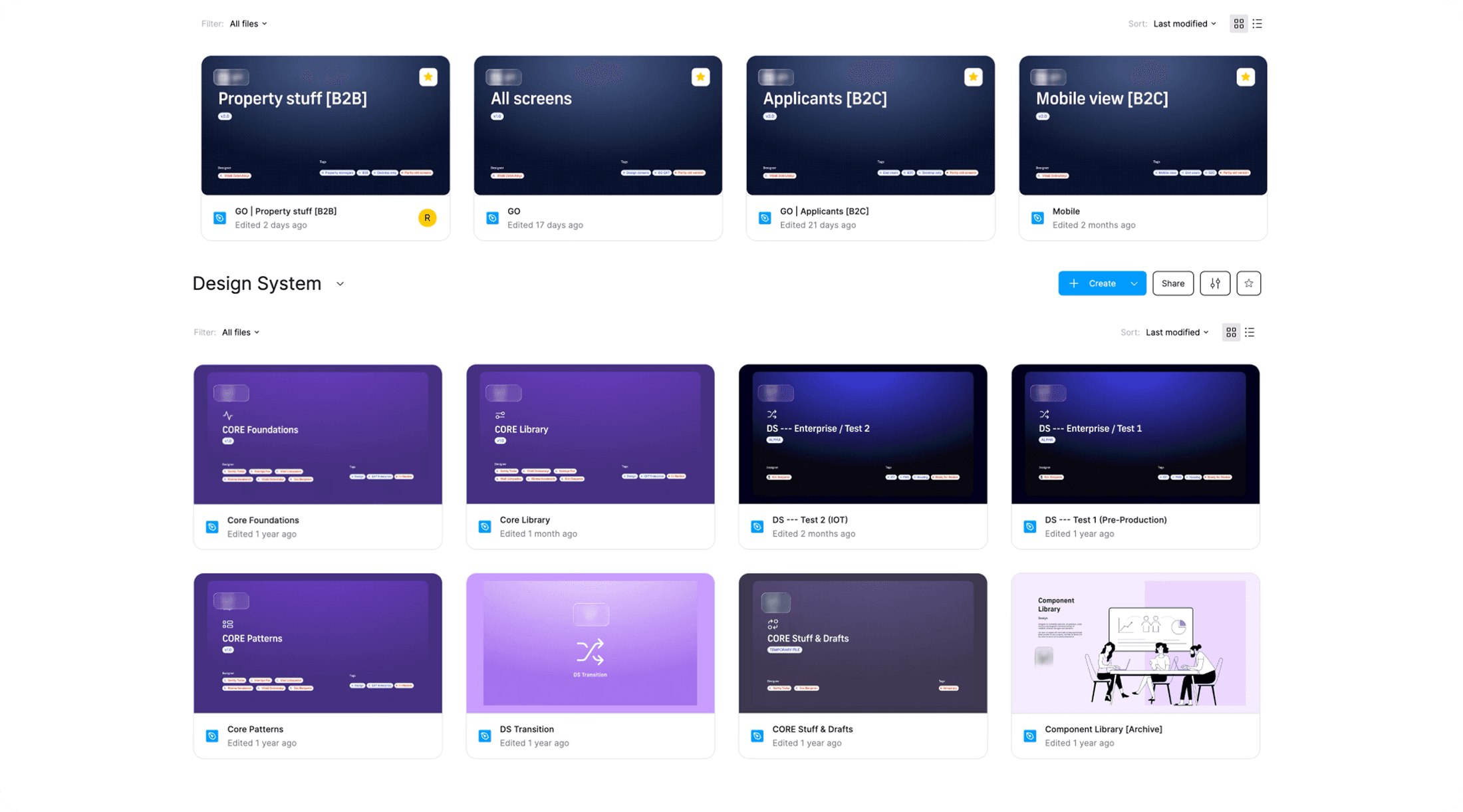
We created a dedicated DS workspace:
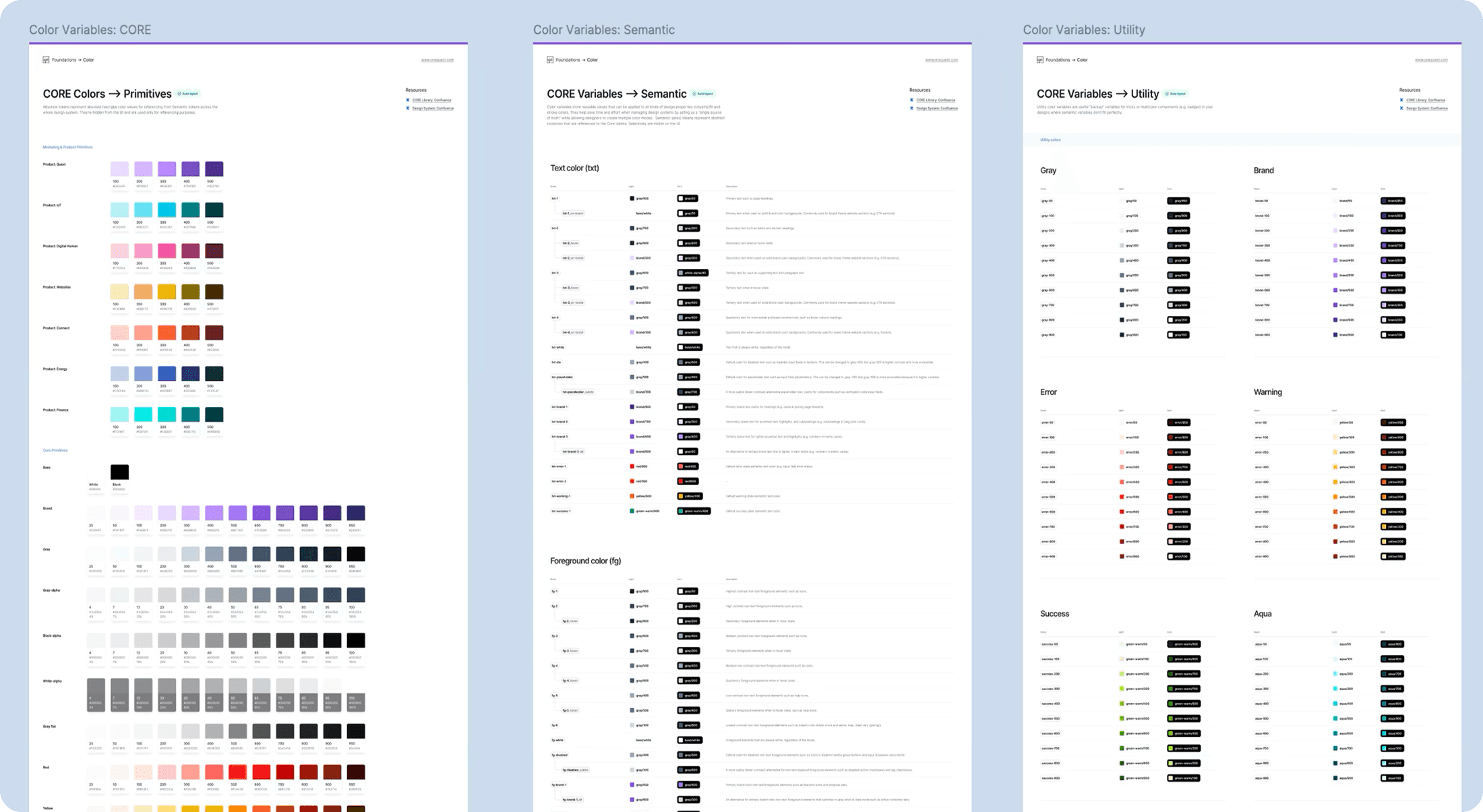
Foundations (tokens).
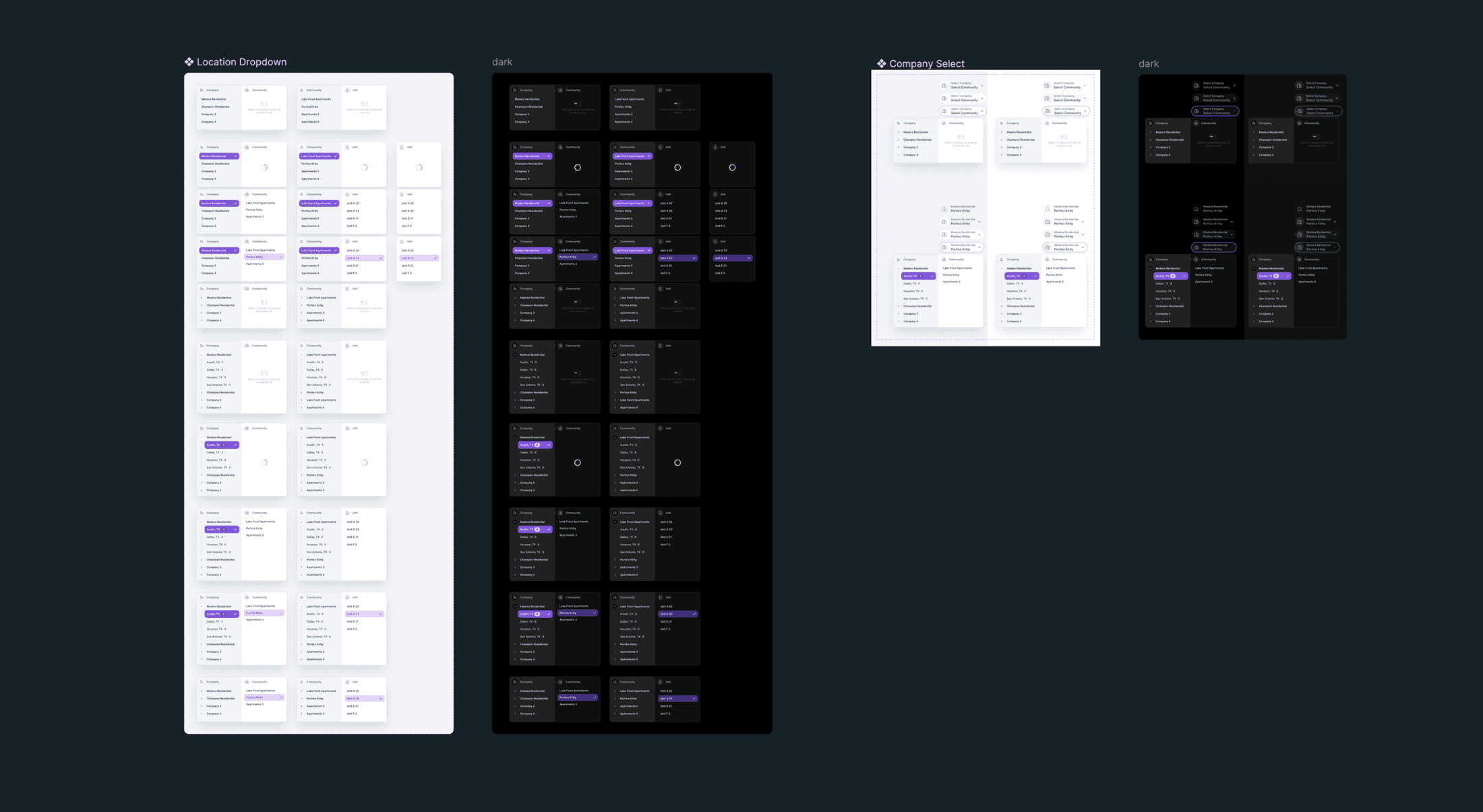
Core Library (components).
Patterns & templates.
Documentation and usage rules.
My role shifted into strategic lead:
Designed the architecture and principles of the system:
“Core vs product-specific”, file structure, naming, governance.
Broke work into clear tasks and delegated:
Client designers and vendor teams built components and docs under my guidelines.
I reviewed, accepted, or pushed back to keep the system coherent.
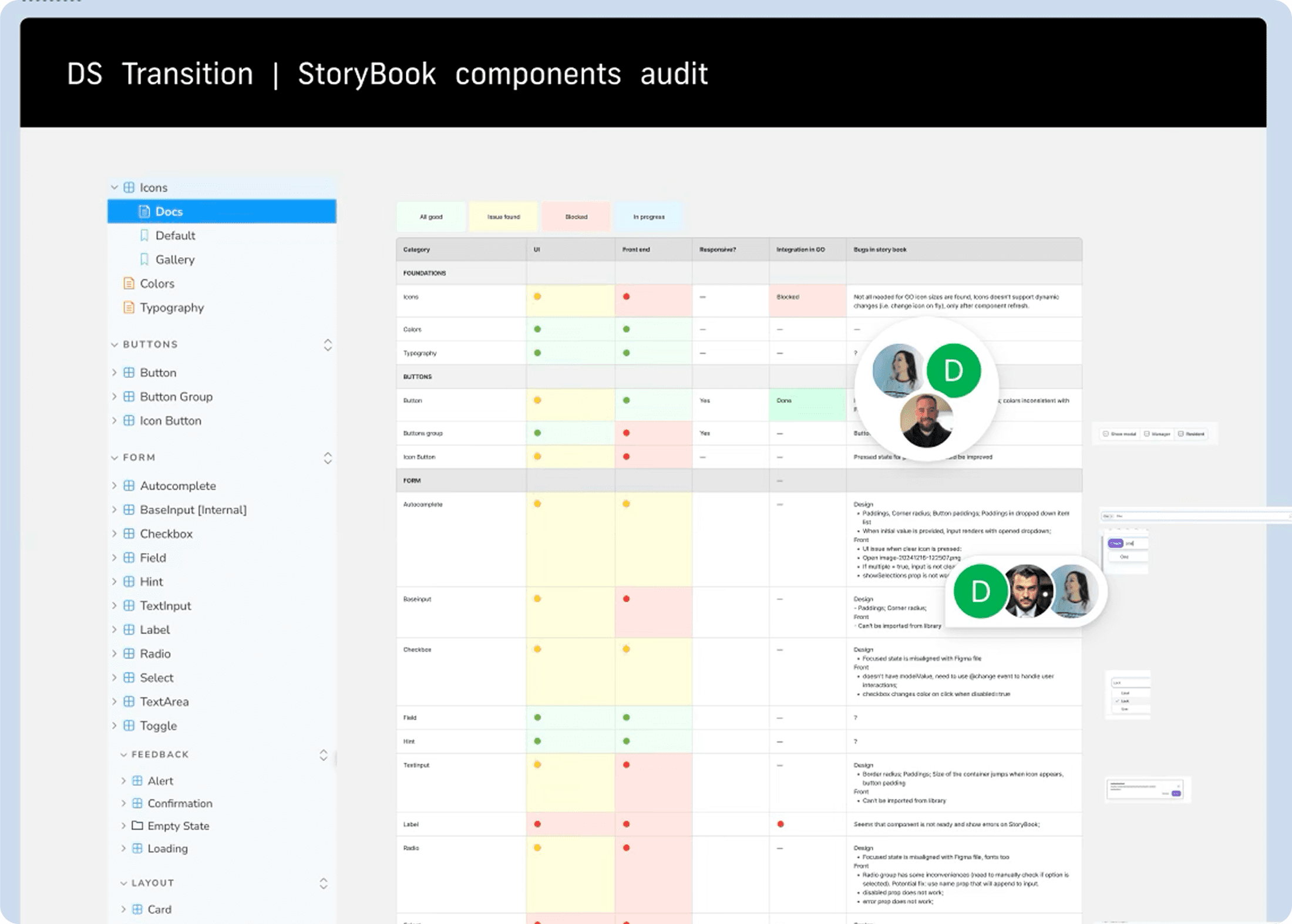
Coordinated with engineering to bring the DS into Storybook and keep Figma code aligned via audits.
Rollout:
B2B/B2C platform became the first full adopter.
For other products, I worked with their leads to define:
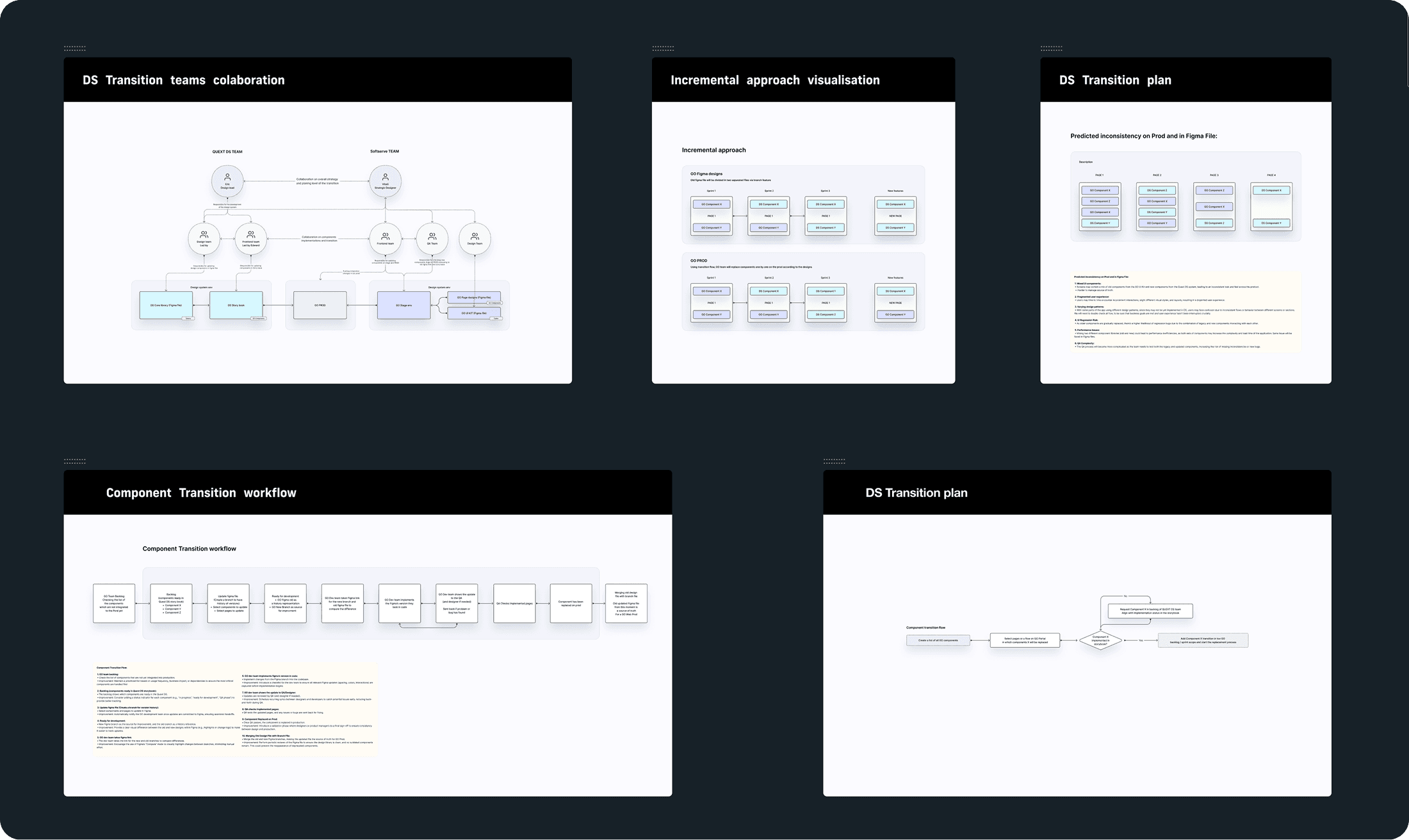
Migration scope and order (what to switch to DS first).
How to live temporarily in a hybrid “legacy + DS” state.
Over time, client designers and vendors came to me with DS questions; my role was to set direction and guardrails, not to push every pixel.
/
Summing up
(06)
Results
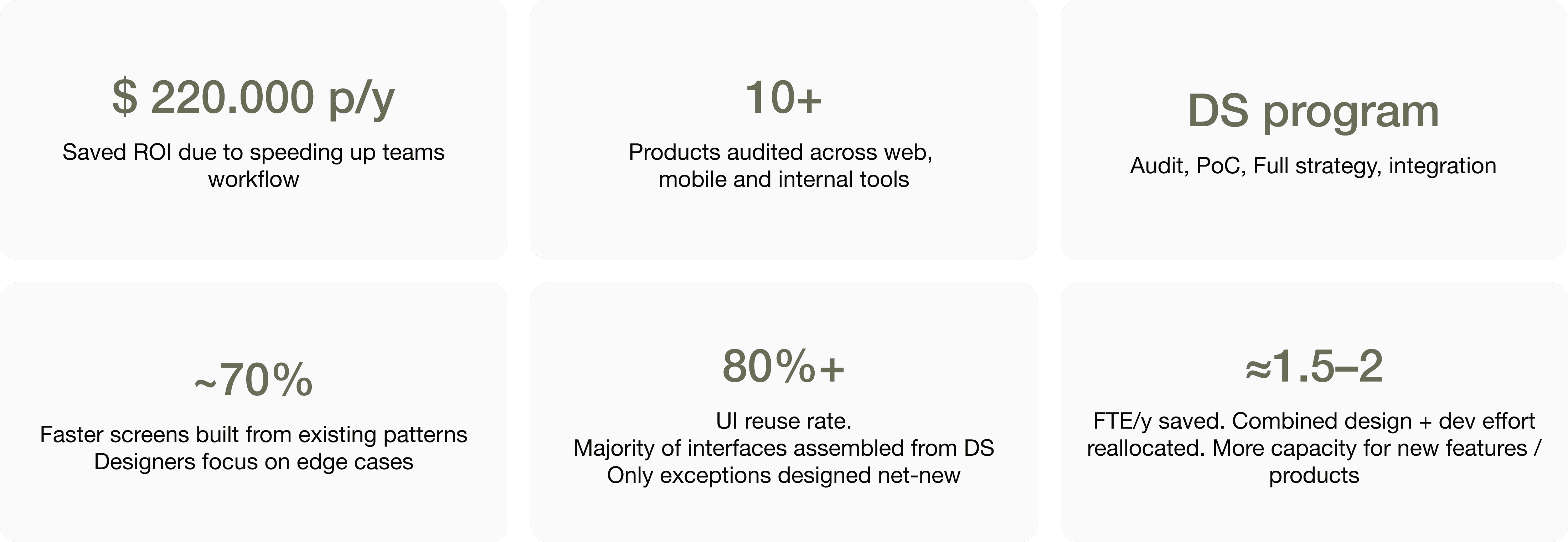
2–3× faster UX start for new products
Teams skip brand / audit phases and start from DS foundations.
≈0% less design time per feature UI
Most screens assembled from patterns; designers focus on edge cases.
≈60% faster UI implementation
Developers reuse DS components from Storybook instead of reinventing UI.
80%+ UI reuse rate in DS-adopted products
Only genuinely new patterns are designed net-new.
$220k+ / year estimated savings
Combined design + front-end efficiency, ≈1.5–2 FTE freed for new work.
Transition strategy for 10+ products to one Core DS tested on two products with visible results.
B2B, B2C, and internal tools now share one visual and interaction language.
Strategic impact & learnings
The client moved from “every vendor does their own thing” to one Design system, many implementers.
The client’s design lead now has a concrete lever, a Core DS and governance model, to manage quality across teams and vendors.
Our company’s role shifted from “vendor on one platform” to strategic design partner for the Enterprise ecosystem.
What this says about my role:
I didn’t “execute a DS brief”; I created the design-system initiative, proposed it, and led it.
I used a real product to prove the idea, then coordinated designers and vendors to scale it.
My leverage was in seeing the systemic gap, turning it into a strategy, and making sure other people could build and ship inside that strategy.
We had two real options for rollout: a painful “big bang” redesign of all products at once, or an equally painful but controlled incremental migration. I pushed against the big-bang approach – too much parallel risk, too much dependency on every team being ready – and argued for a phased rollout: one Core DS, one reference product (our B2B/B2C platform), then product-by-product adoption. That decision made the change slower on paper, but survivable in reality: we could control scope, learn from each migration, and avoid freezing the entire portfolio for a redesign fantasy.
Reflections
This case proved to me that a design system in an enterprise context is less about components and more about sequencing and trust. The only reason the client accepted a portfolio-level change was because we first sat in the same room, walked through their own products side by side, and agreed on the problem before talking about solutions.
The phased path we took: audit → UI-kit proof on one live product → Core DS → Storybook → incremental rollout choice without freezing delivery were the best possible approach.
Latest Projects.
Projects across discovery workshops facilitation, design execution, design leadership covering different levels of ownership and impact.