QUEXT GO .
A dual-sided rental platform for the U.S. market, simplifying applications for renters, consolidating screening for property managers. Built from scratch.
/
Contribution overview
(01)
Led the end-to-end design of a real estate platform from concept to launch
Starting from a brief and working directly with the CEO to shape product vision and strategy. I was responsible for delivering a comprehensive experience across B2B and B2C web and mobile platforms.
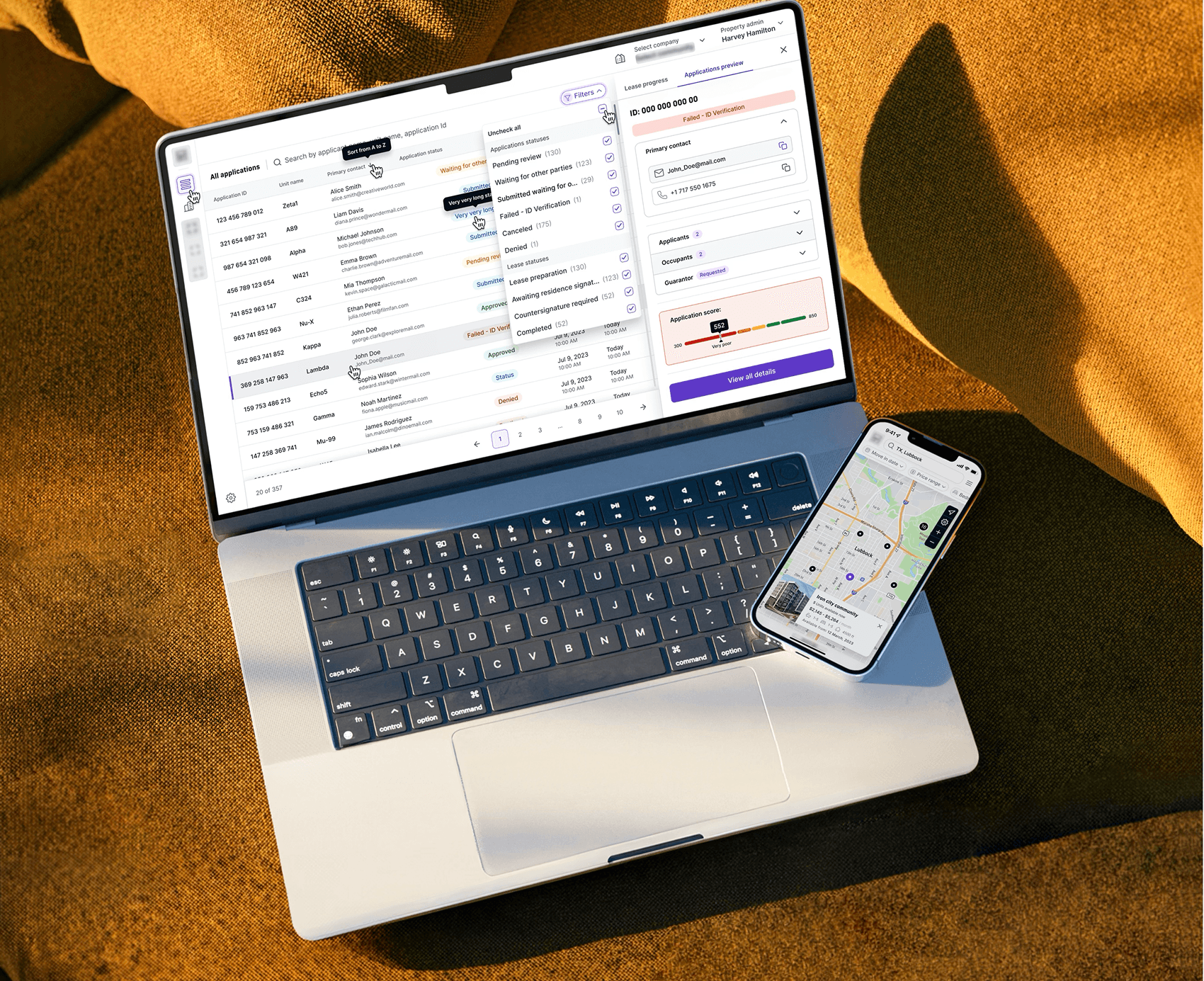
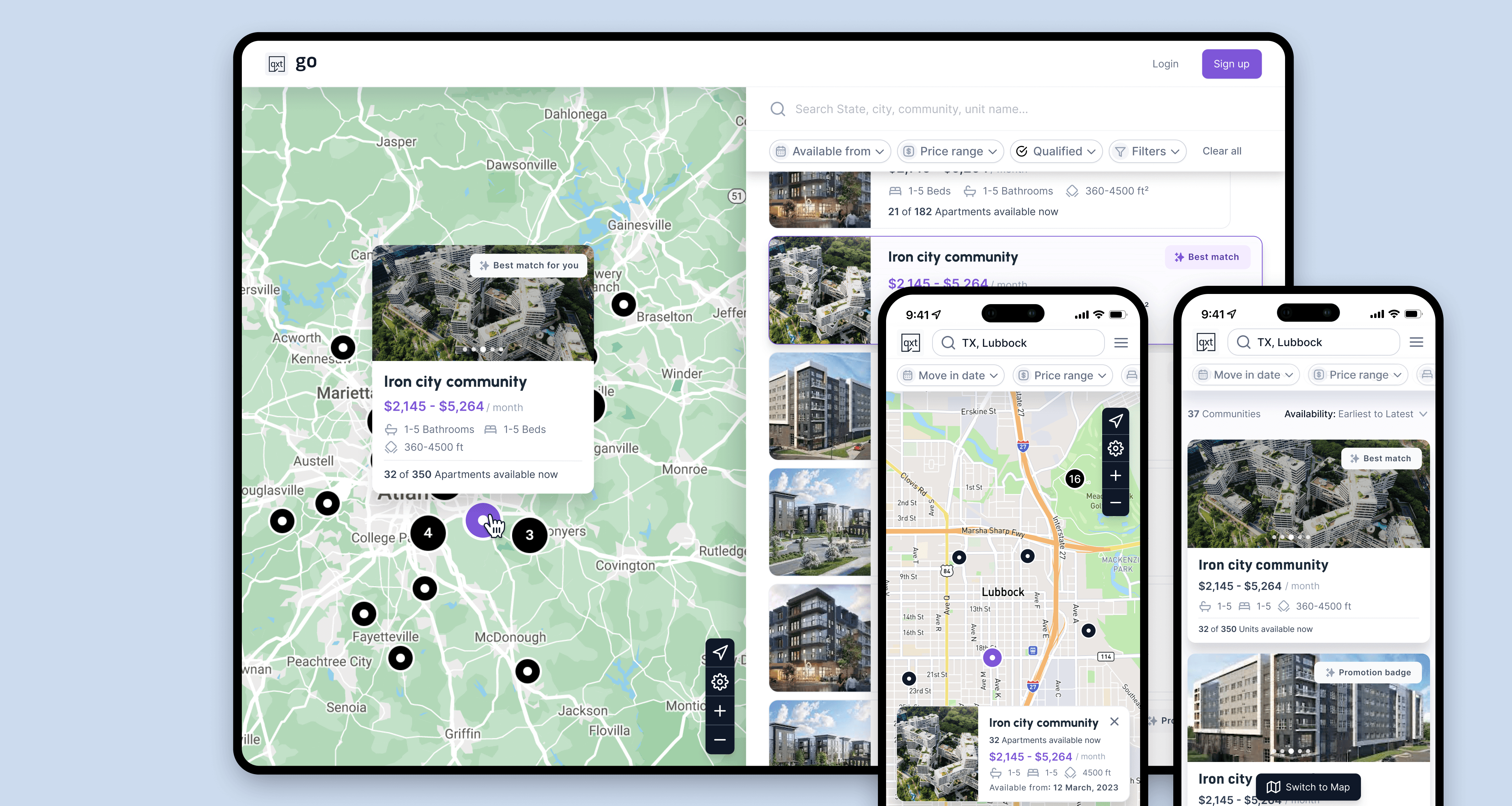
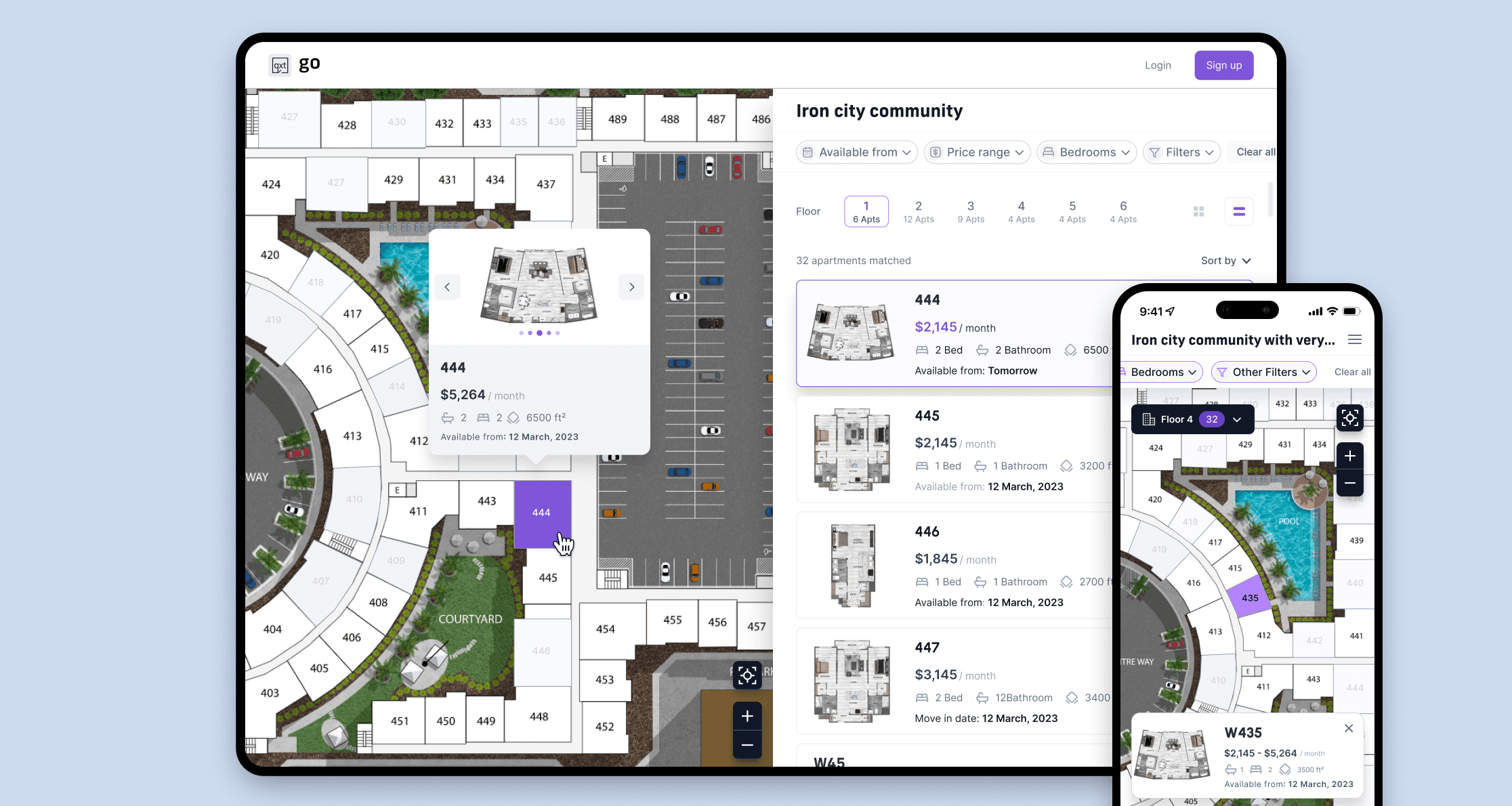
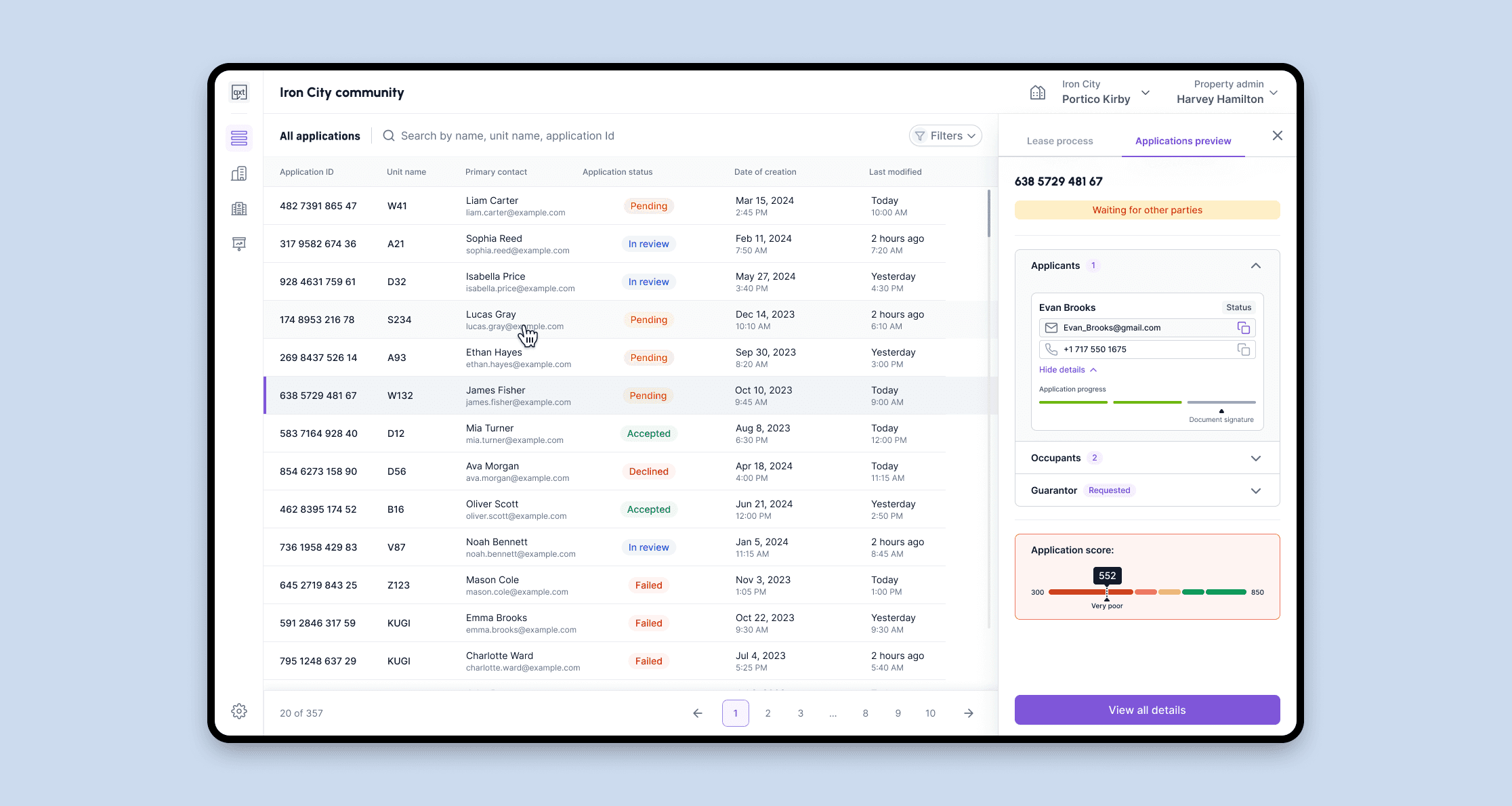
Designed the full interface ecosystem for property managers (B2B), including application processing, data verification, workflow optimization. For the B2C experience, I created the property search portal with advanced filtering, community and apartment listings, mobile interactions, Face ID authentication, registration, and an optimized application flow.
Developed a scalable design system and UI kit to ensure consistency and accelerate delivery across platforms. The product was successfully presented at industry exhibitions and conferences in Texas, supporting business growth and stakeholder engagement.
/
Project overview
(02)
One platform. Two user types. Three surfaces.
QUEXT GO is an Start up B2B/B2C SaaS platform for the U.S. real estate market, a unified portal connecting rental applicants with property managers, streamlining the entire application, screening, and decision-making process. The product spans web (B2B + B2C) and mobile (B2C).
/
Problem
(03)
Two users. Two broken experiences.
For applicants (B2C): a fragmented, expensive, time-consuming process — 18- 24 steps, 60 - 80 minutes, $100–200 per application, repeated every time they applied to a new unit. For property managers (B2B): no single source of truth. Credit scores, background checks, ID verification, and applicant data lived across 5–7 separate tools. Decisions were made manually, slowly, and inconsistently.
/
Context
(04)
A simple brief that became an enterprise product.
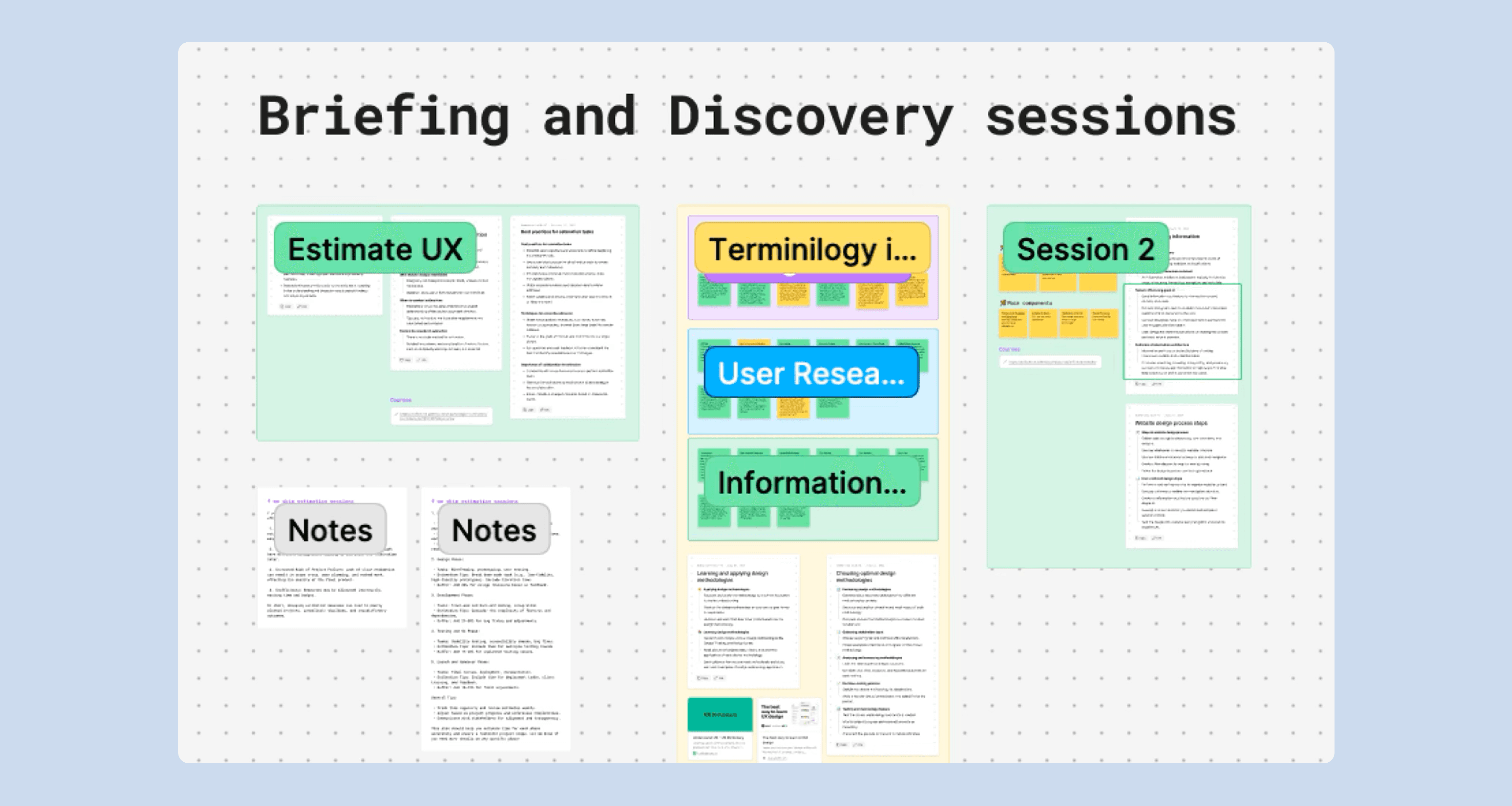
The project started as a basic mobile portal for B2C applicants. Through ongoing collaboration with stakeholders, it evolved into a full-scale enterprise platform serving both sides of the rental market. The team: 30 people, frontend engineers, QA, BAs, a PM, a tech lead, I was the only designer, working across three surfaces from MVP through post-MVP. Constraints included U.S. legal compliance requirements, budget limitations on custom integrations, and the complexity of serving two completely different user types within one product.
/
Role & Ownership
(05)
Sole designer. Full ownership. Direct access to the CEO.
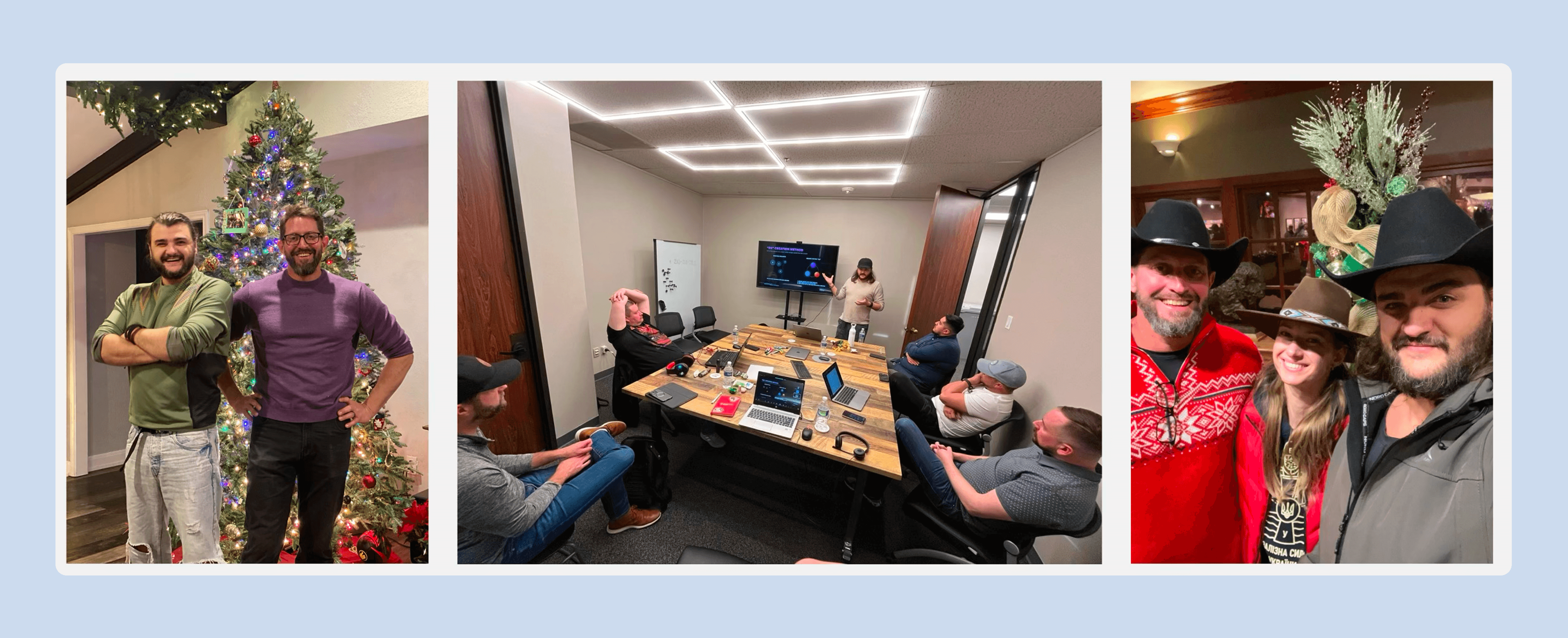
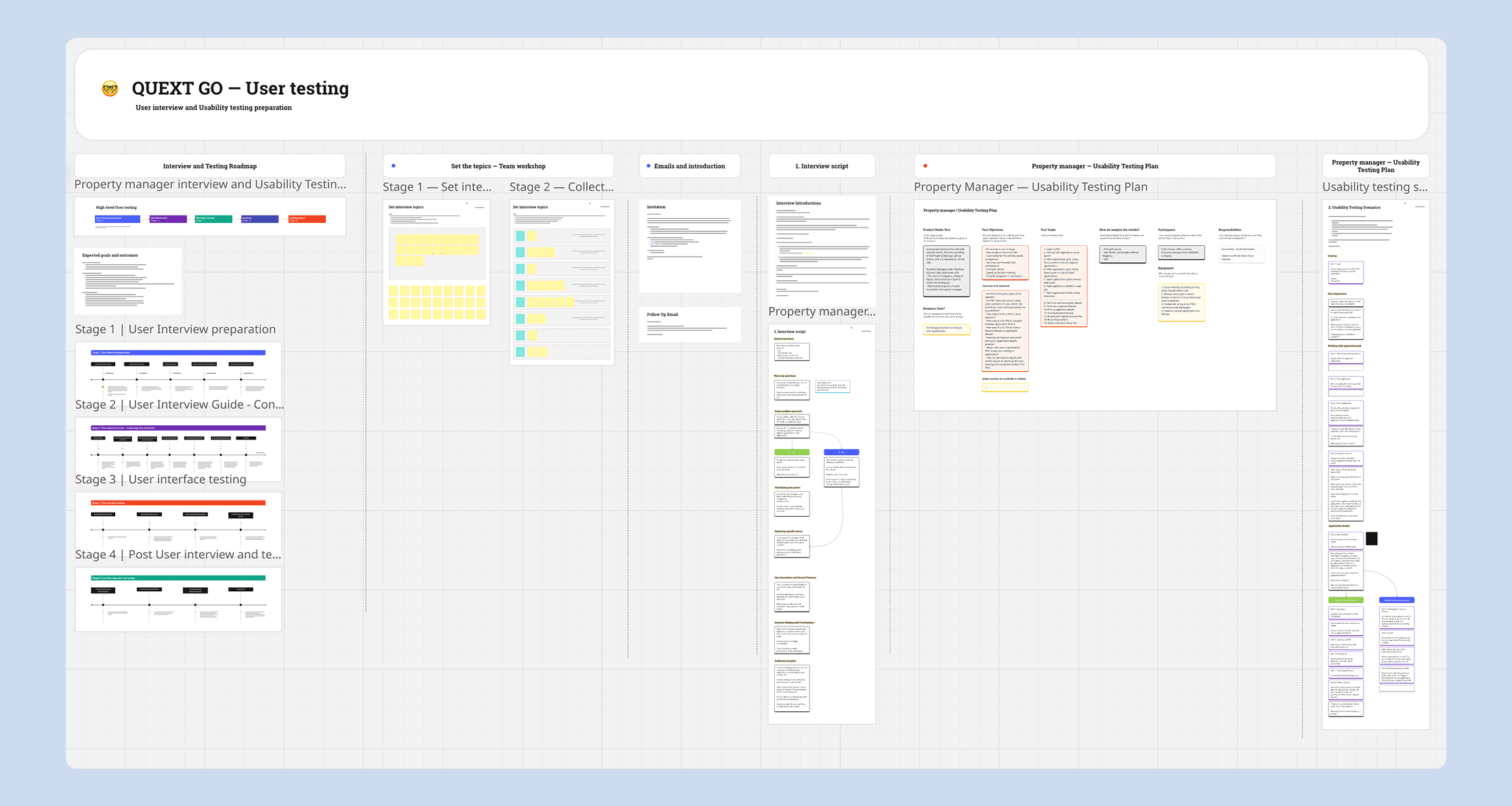
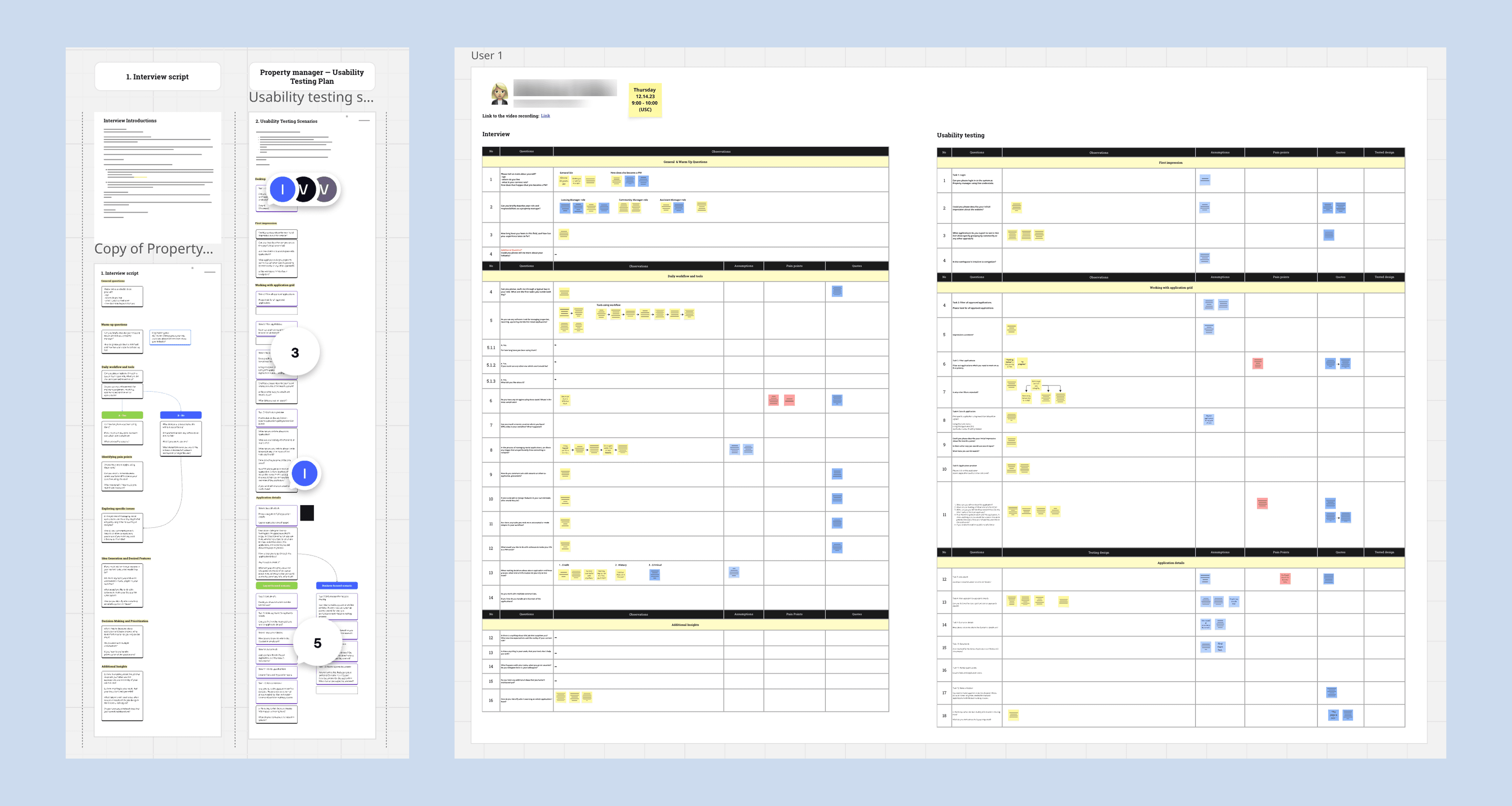
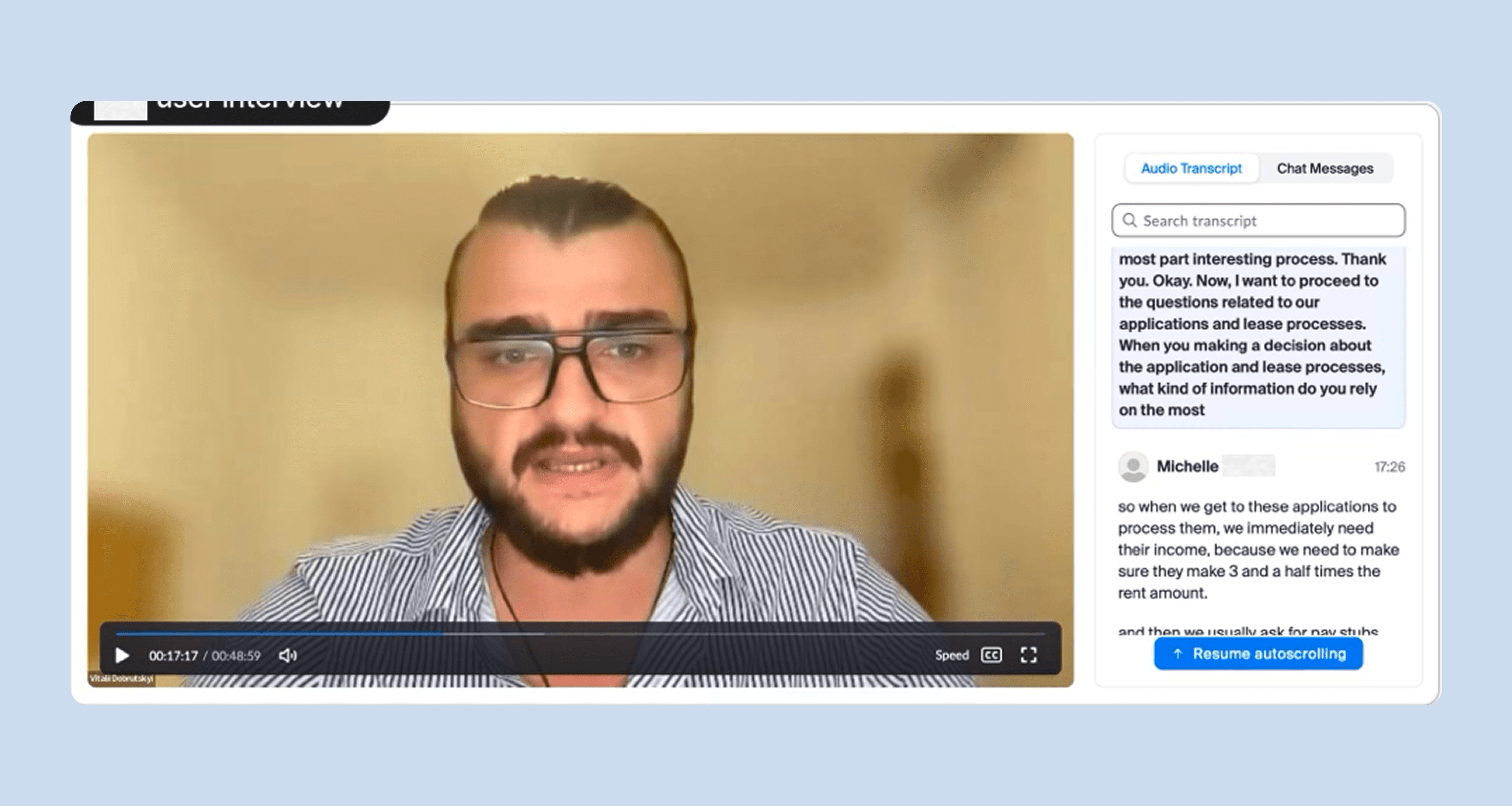
I owned end-to-end design across all three surfaces, from research and information architecture to UI delivery and design system foundations. I conducted user interviews and usability testing with property managers, ran on-site workflow observations, personally audited competitor flows, collaborated with the legal department to identify removable vs. mandatory steps, and partnered with the tech lead on integration strategy. I presented design decisions and product direction directly to the client's CEO, running design demos and rationale walkthroughs throughout the project. I also managed and delegated work to mid-level designers on internal pages while personally leading all core features and critical flows.
/
Notes
(06)
Key insights
Property managers weren't making decisions, they were doing data assembly.
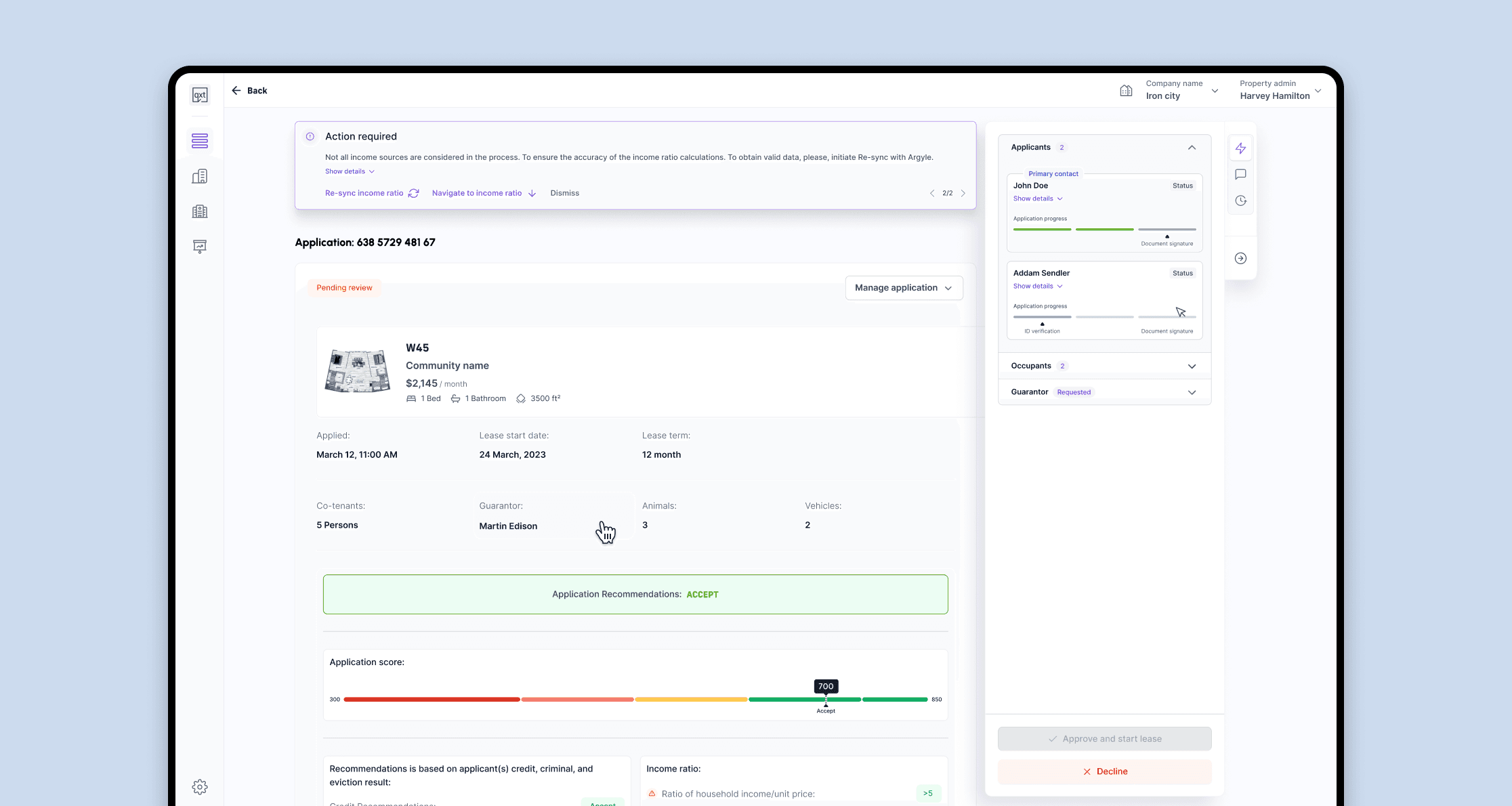
On-site observation showed property managers printing credit scores, manually compiling documents, and jumping between 5–7 tools before they could even begin evaluating an applicant. The insight was immediate: put everything on one scrollable page, score, background check, ID status, recommendation, and they could make a decision without leaving the screen.
Legal constraints were a design asset, not a blocker.
By working directly with the legal team, I identified exactly which steps were non-negotiable and which were assumptions. This gave me a clear framework: protect the required steps, eliminate everything else.
Critical decisions
I pushed back on the client, and used data to win.
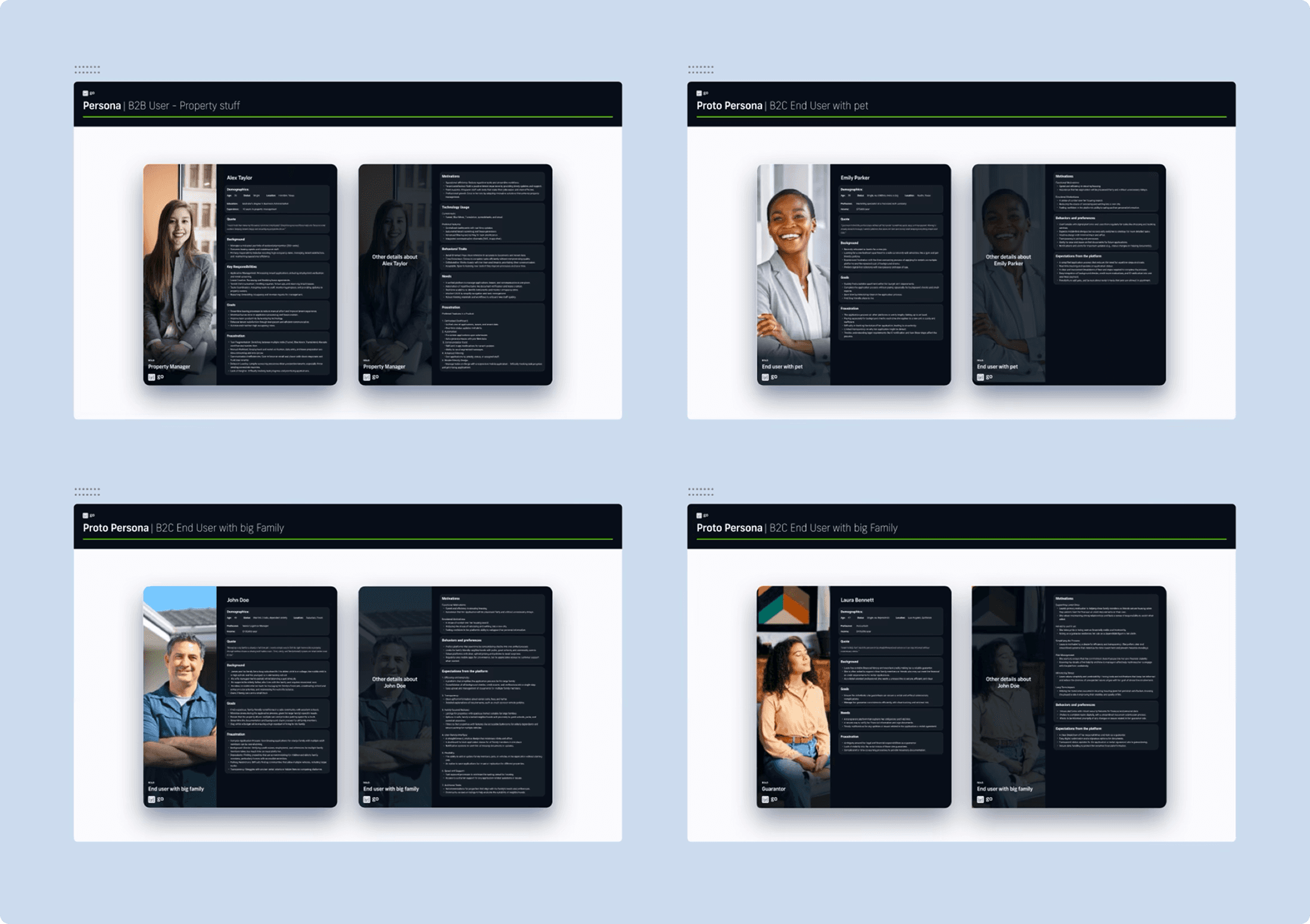
As the product grew, the client began adding data collection fields to the applicant flow — useful for their internal research, but damaging to the user experience. I pushed back using personas and pain point data, showing we were drifting from the core user need. The client agreed to refocus. That sprint, we stayed on target.
Subscription over per-application fees.
Rather than charging applicants per submission, we designed around a monthly subscription — background check data stored server-side and reused across applications. This directly reduced the cost barrier for users and created a stickier, more competitive product.
One scroll. All the data. One decision.
Instead of paginating applicant data across multiple views, I designed a consolidated long-form review page for property managers. Scroll once, see everything, make a decision. No tab-switching, no tool-jumping.
Execution
Three surfaces. One coherent system.
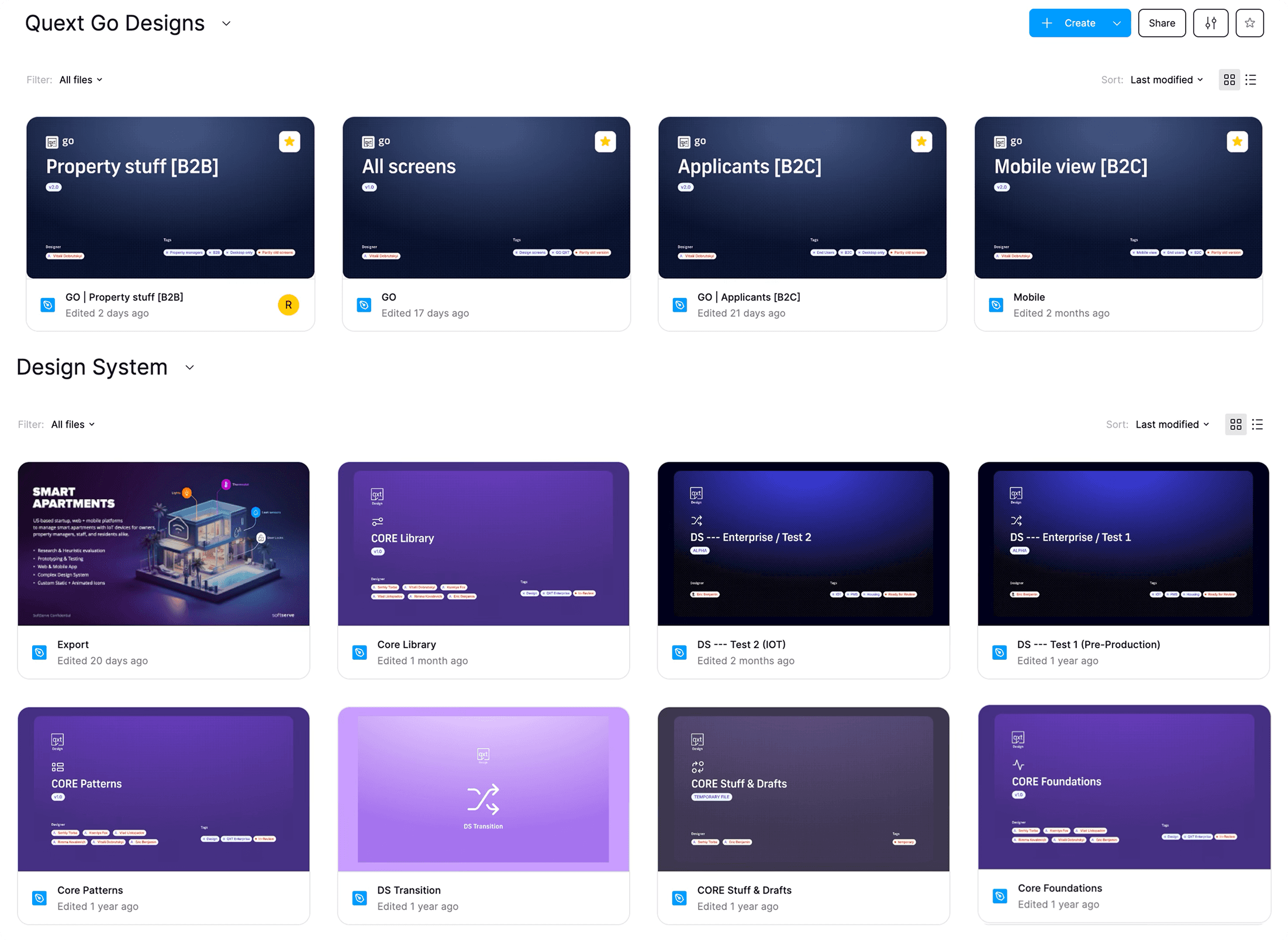
The B2C experience covered property search with advanced filtering, community and apartment listings, mobile-first interactions, Face ID authentication, registration, and the optimised application flow. The B2B experience covered the full property manager workflow — application processing, data verification, screening, and decision-making tools. I built the UI kit from scratch, which became the foundation for the full enterprise design system.
We caught problems users didn't even know they had.
I ran usability testing with real users and used session recording and mouse tracking to identify friction points — several caught and resolved in active production without users knowing they were being observed.
Impact
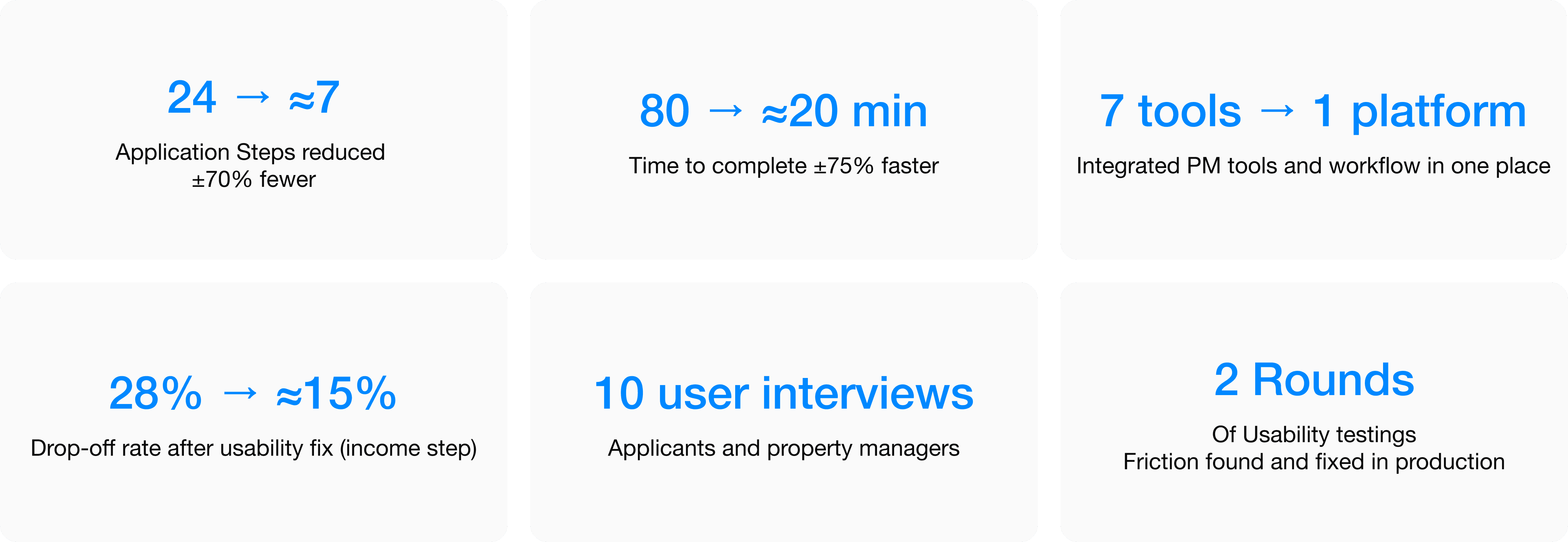
24 steps became 7-10. 80 minutes became 20-30.
Application steps reduced from 24 to 7 — a 70% reduction. Completion time dropped from 80 minutes to 20–30 minutes — a ~75% improvement. Property managers who saw the product in demo responded immediately: "This is exactly what we've been missing." The product was presented at industry exhibitions in Texas, resulting in new partnerships and additional investment for the client. The company shut down before full-scale launch. But the product worked, users validated it, and the numbers were real.
Latest Projects.
Projects across discovery workshops facilitation, design execution, design leadership covering different levels of ownership and impact.